
Accounts & Orders System: Managing pharmacy to clinic orders in Compound Direct

Clinic orders in Compound Direct follow a different workflow to standard in-store or online pharmacy orders. These orders are typically linked to a clinic account for billing, reporting, and record keeping, with prescriptions submitted either directly by a clinic or by a patient under a clinic’s care. In all cases, the order remains associated with the clinic for accountability and tracking.
Payment responsibility and delivery preferences for clinic orders vary by clinic agreement. Orders may be billed to the clinic or the patient, and delivered either to the clinic or directly to the patient, resulting in several common clinic order workflows.
This blog highlights the workflows most commonly used for premium sites for clinic orders, explaining how Compound Direct supports flexible billing and fulfilment while maintaining clinic level oversight. It also walks through the clinic order process from start to finish, including the automations that streamline processing and communication.
Stages of a clinic order
This section breaks down the individual stages an order passes through, explaining the actions required at each step and how orders move from draft and order creation through to payment, dispensing, fulfilment, and collection.
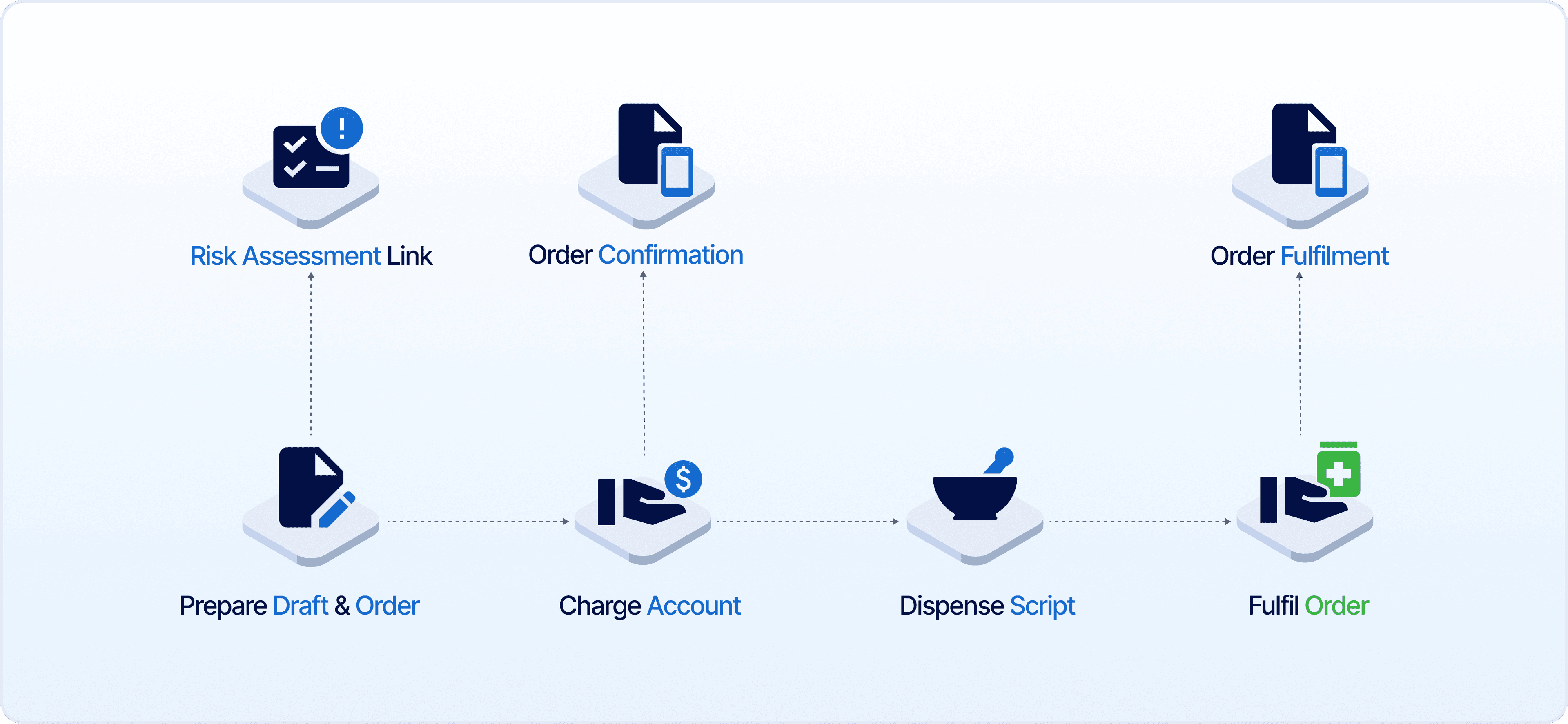
To ensure these workflows operate as intended, you should first create and configure order workflows that define default clinic order settings. For guidance on setup, see our blog: Compound Direct Order Workflows: Streamlining pharmacy operations.
Stage 1: Preparing the draft and order
A draft can be created as soon as a prescription or order is received. For online orders, some pharmacies choose to send a confirmation message to the patient or clinic to acknowledge receipt. Drafts and Dispensed scripts can be added to an Order.
You can also create an order directly from the Orders page. A single order can include multiple products for multiple patients, each with different prescribers. Formulations, batch stock, commercial drugs, and retail products can all be searched directly from this page.
For more information on the different ways drafts can be added to an order, see our blog Drafts to Orders: A guide to order creation in Compound Direct.
Products with set pricing will show their available quantities and prices, and both can be adjusted as needed.
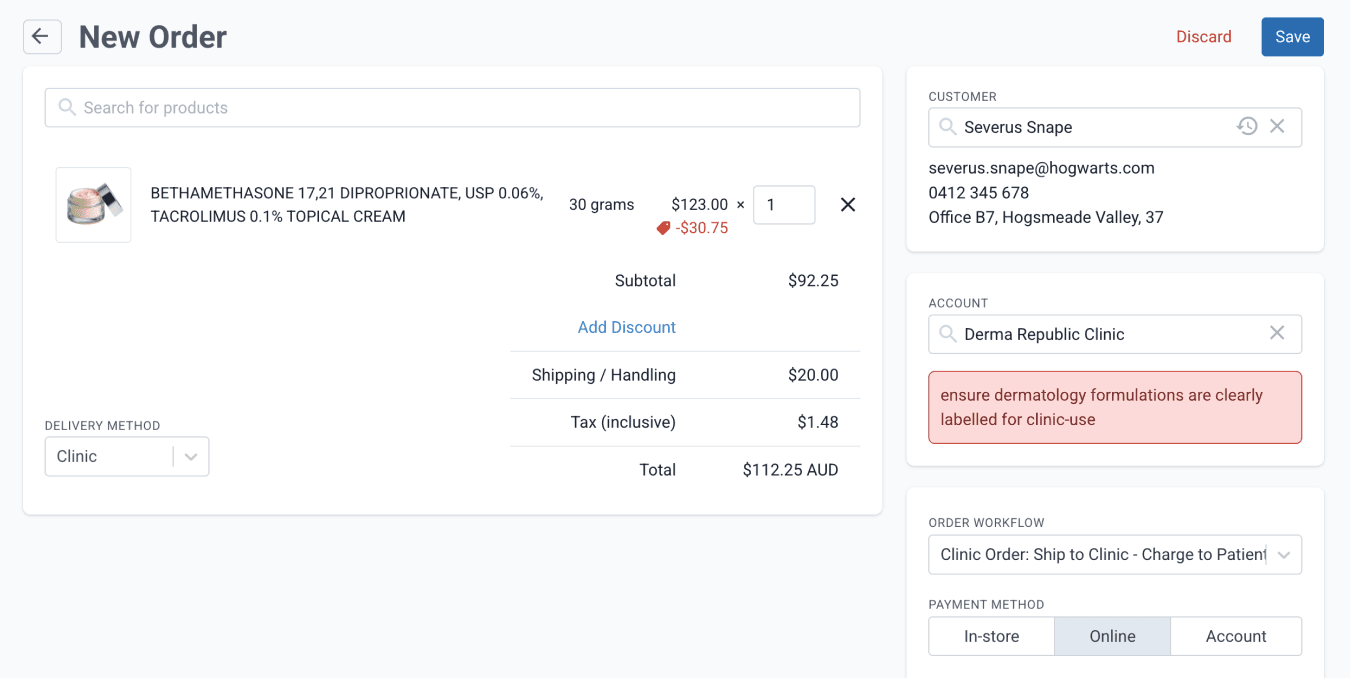
From the orders page
Order workflow defaults
After confirming that the correct products and patient have been added to the order, the next important step is selecting the appropriate order workflow.
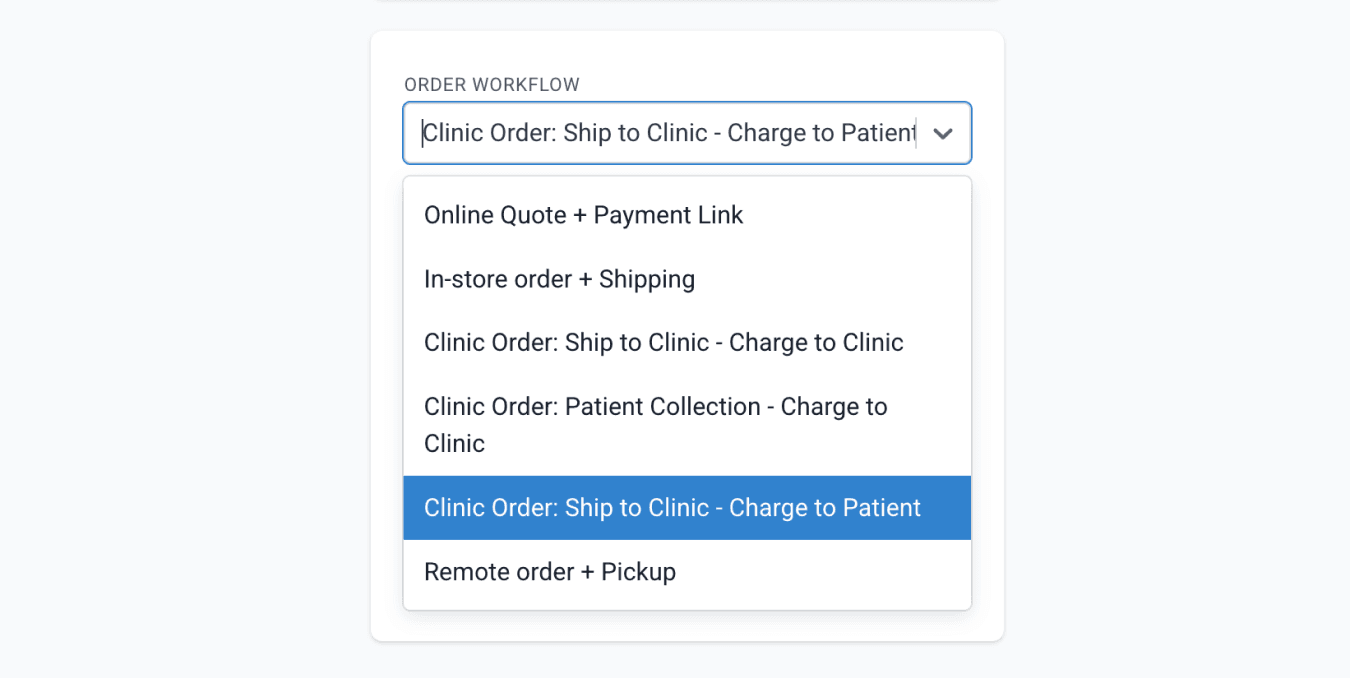
From the orders page
The selected order workflow determines the default account, delivery method, shipping fee (if the default delivery method is shipping), tax, and payment method. These fields will be pre-selected based on how the workflow was configured.
Selecting a workflow does not restrict the order settings. All fields can still be adjusted if needed, except for the payment method. The payment method can only be changed if it is enabled in the order flow settings (Configure workflow basics).
These settings can be configured when setting up a workflow. The Compound Direct Order Workflows: Streamlining pharmacy operations blog provides a step-by-step guide on how to create and customise these parts of the workflows.
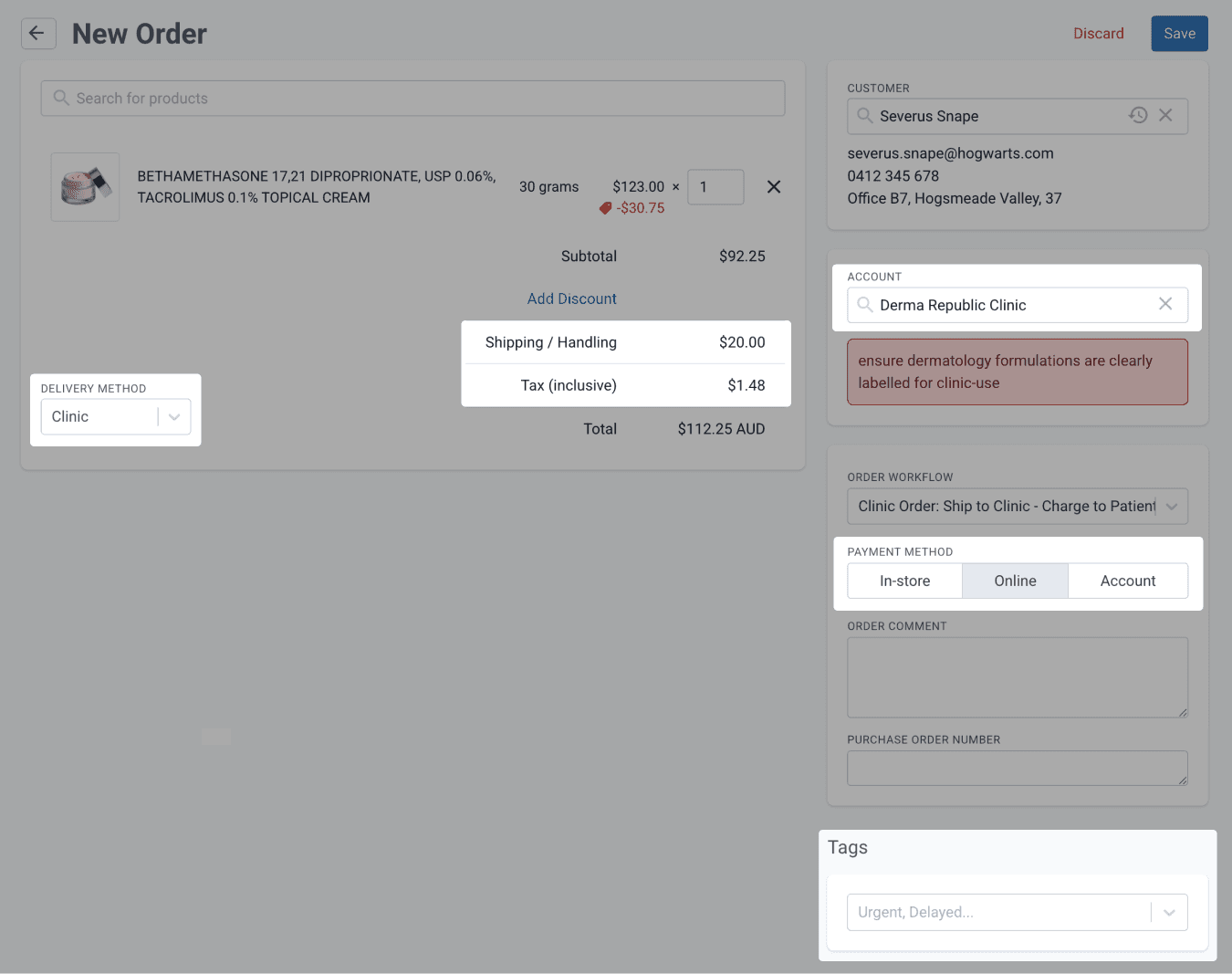
From the orders page
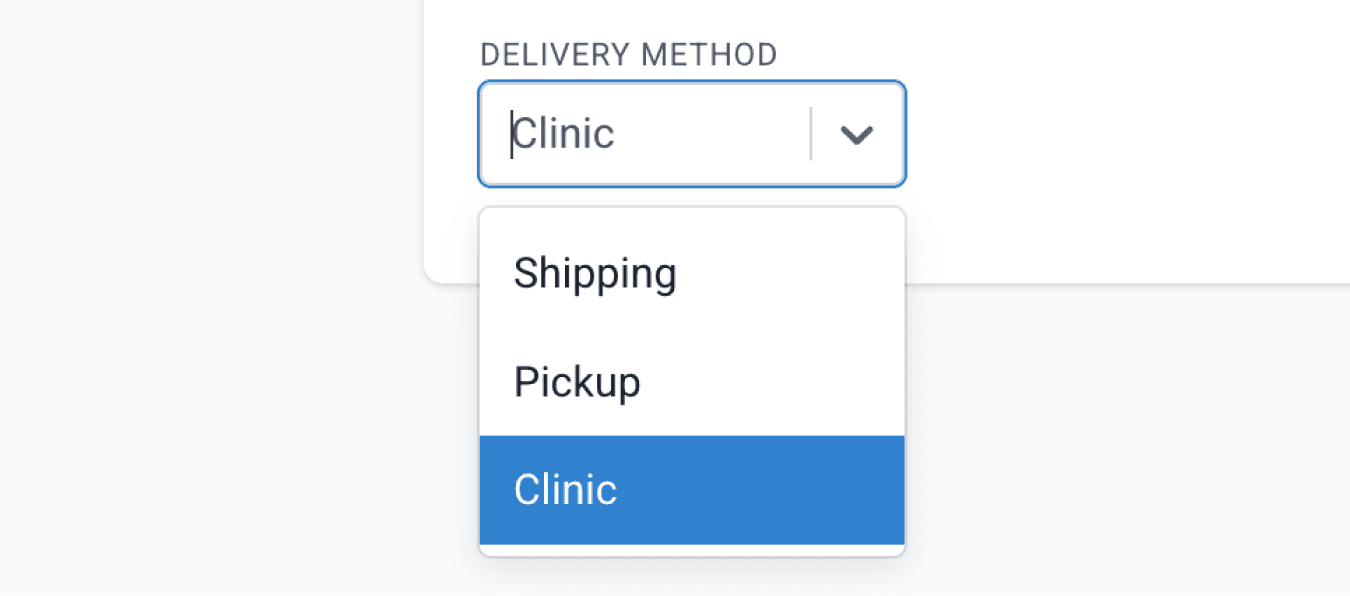
A. Delivery Method
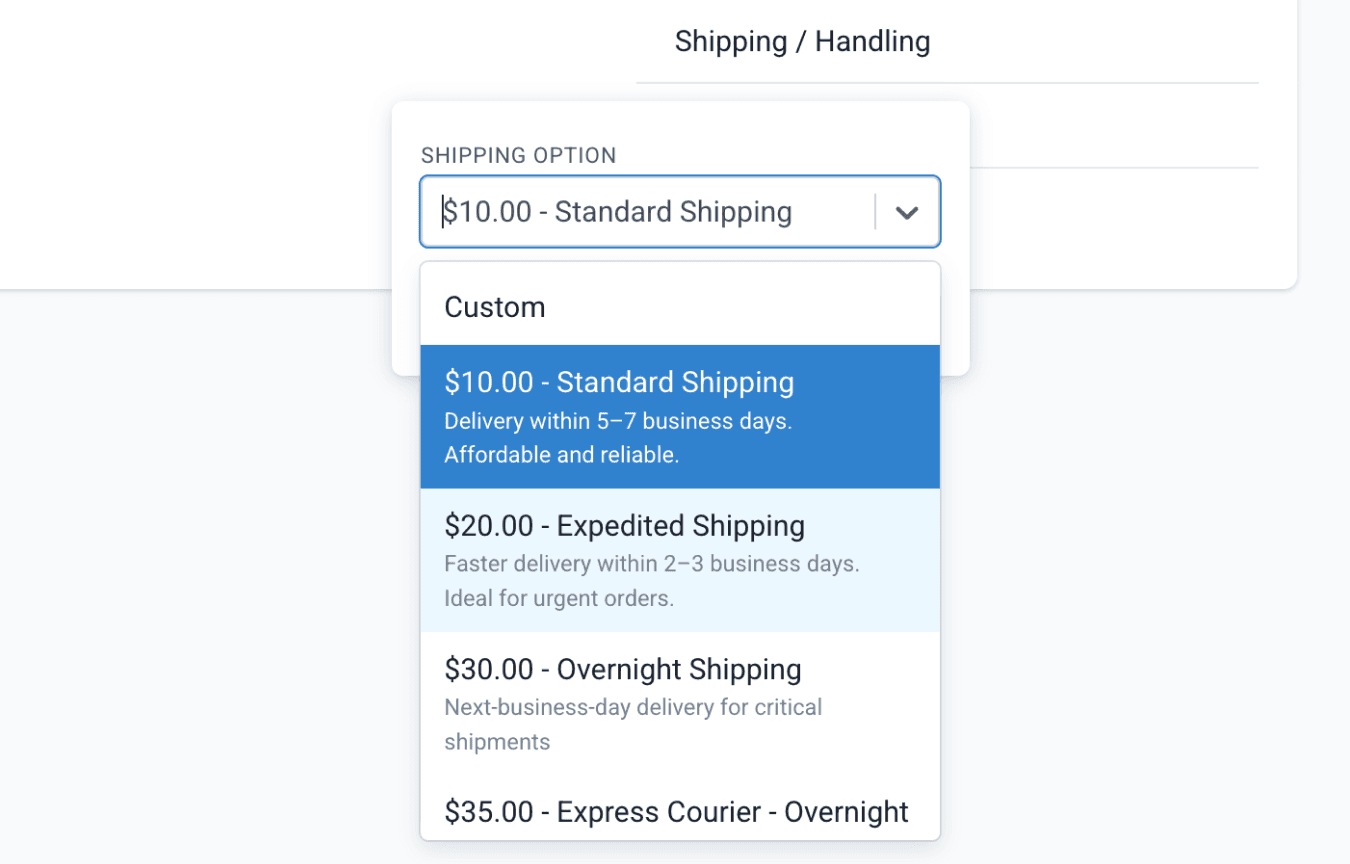
If the default delivery method for the selected workflow is Shipping or Send to clinic, the corresponding default shipping option will be pre-selected on the Orders page.
From the orders page
You can switch to any other shipping option configured within the workflow (Customise shipping and pickup options) or enter a custom shipping or handling fee if none of the preset options apply.
From the orders page
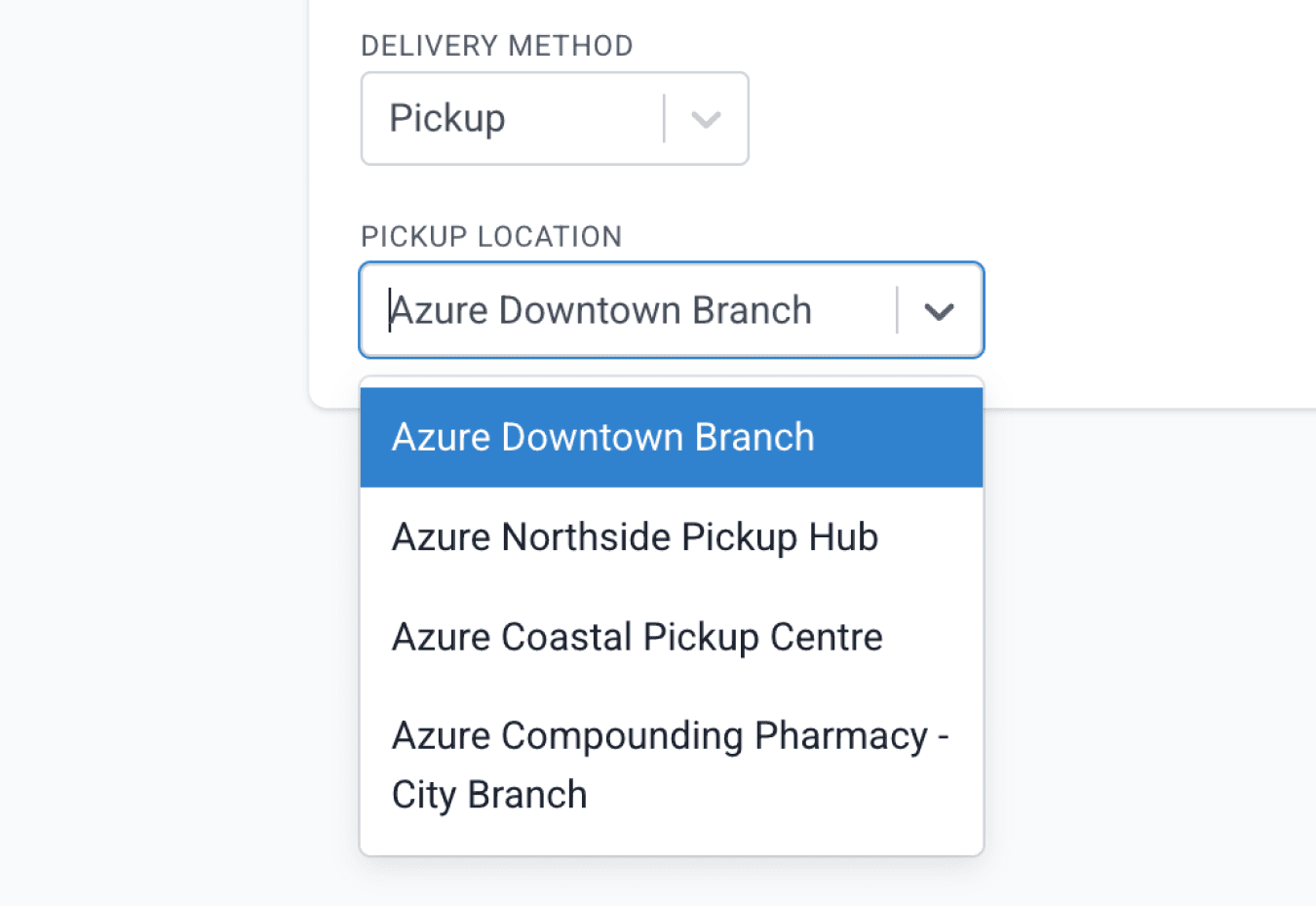
Use the dropdown menu to switch the delivery option to pickup. Any pickup locations added to the workflow will then appear as selectable options in the menu.
From the orders page
To learn more about setting up delivery methods, see our blog Compound Direct Order Delivery: A guide to pickup and shipping options.
B. Tax
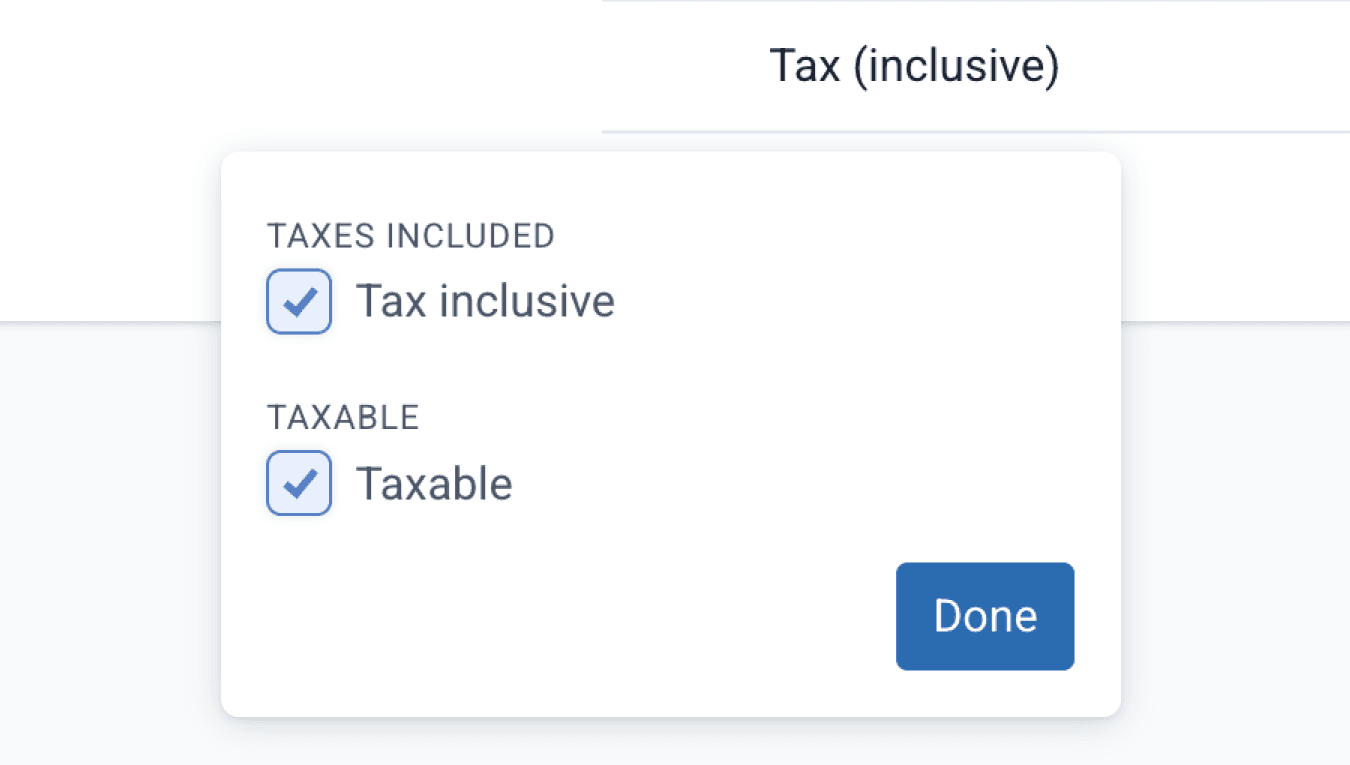
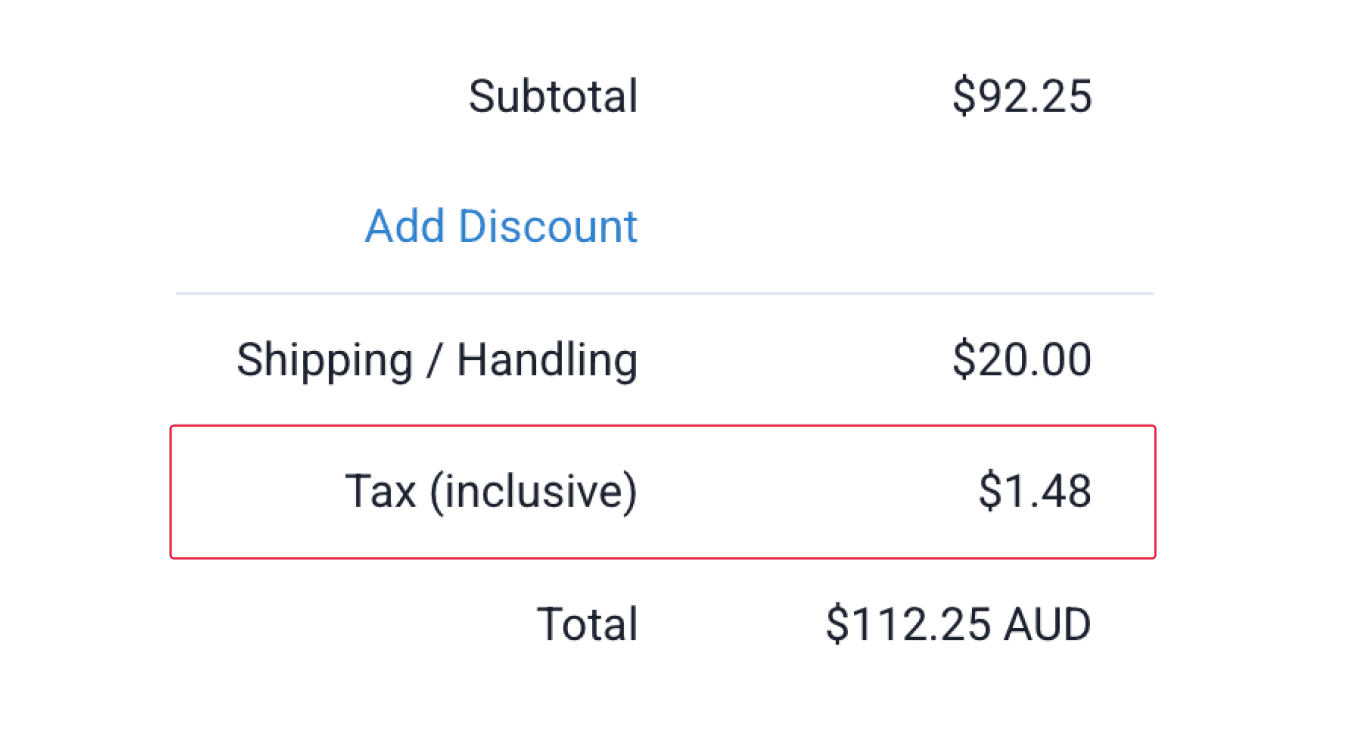
The default tax settings defined in the workflow will be applied here, including whether tax should be added and whether the item is tax inclusive. (Set up tax settings).
From the orders page
C. Accounts
When a default billing account is selected during workflow setup, it will be automatically applied when an order is created (Billing acount). You can then choose how the order is handled: bill it to the account, bill it to the clinic, or simply associate it with the account without charging it.
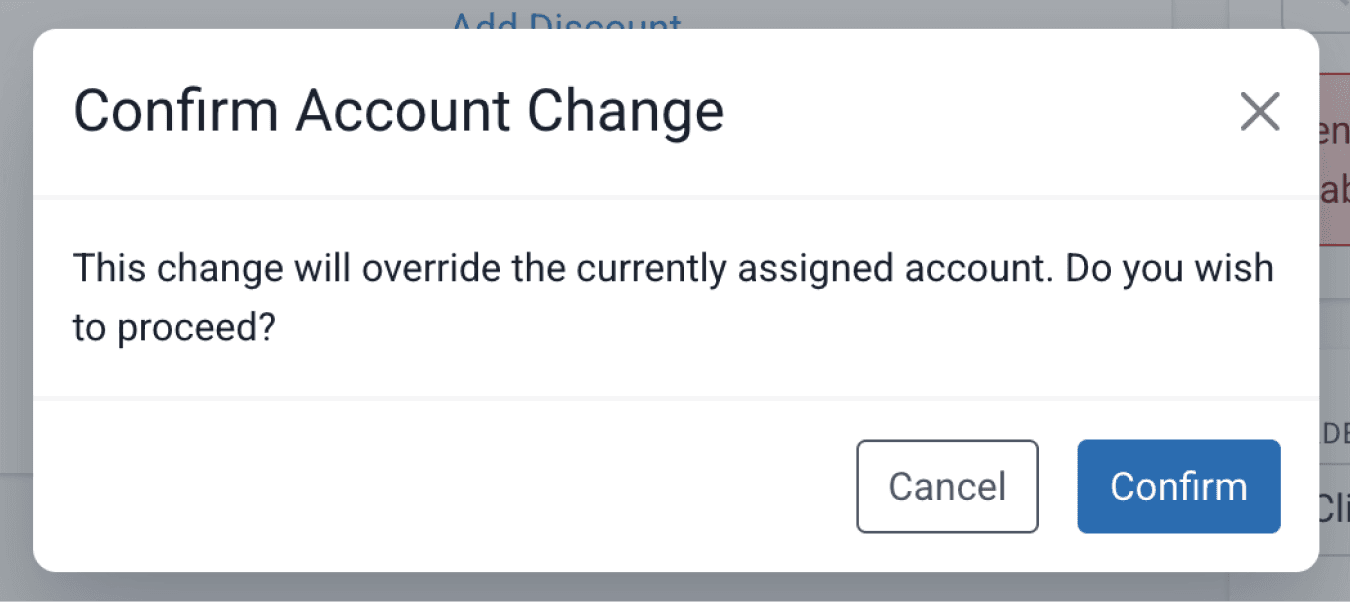
When you select a workflow with a default account that differs from the account currently selected on the Orders page, a confirmation message will appear, advising that the workflow has an assigned account and asking whether you want to continue.
From the orders page
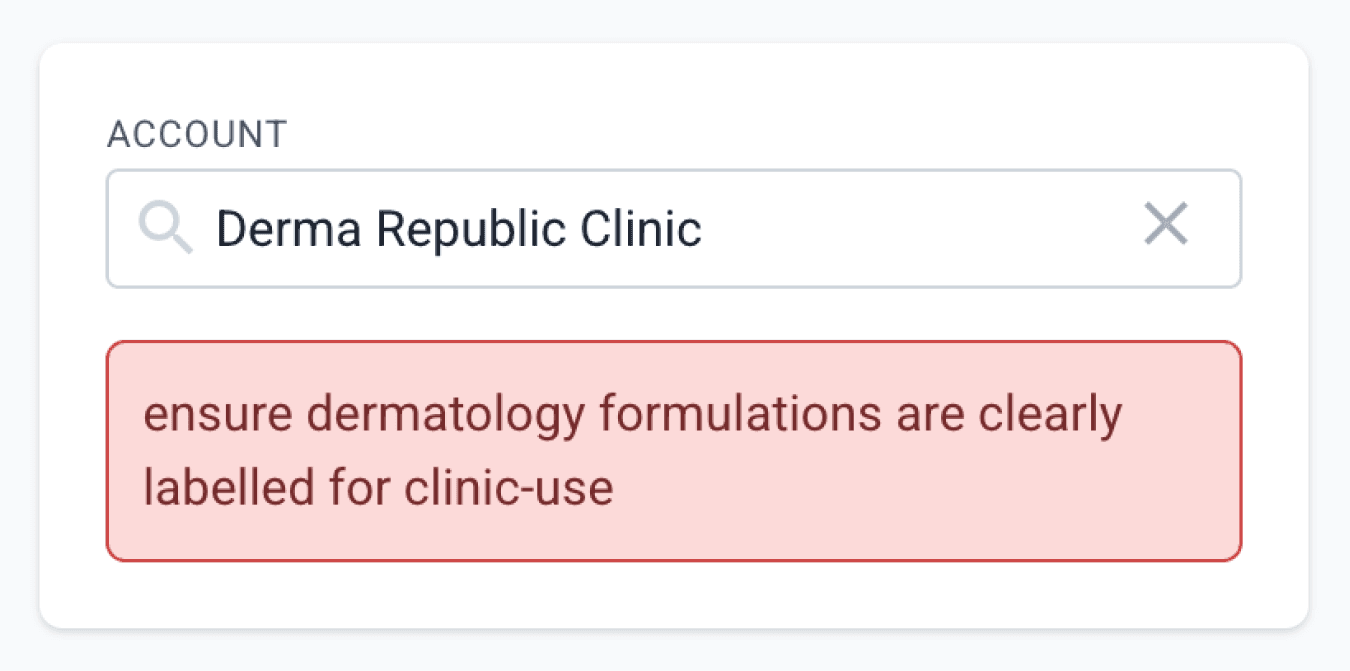
Any important notes added to an account will also be displayed on the orders page. This helps ensure staff are aware of account-specific reminders or instructions when an order is created, reducing errors and keeping workflows running smoothly. You can add or modify these notes from the Accounts page.
From the orders page
D. Payment Method
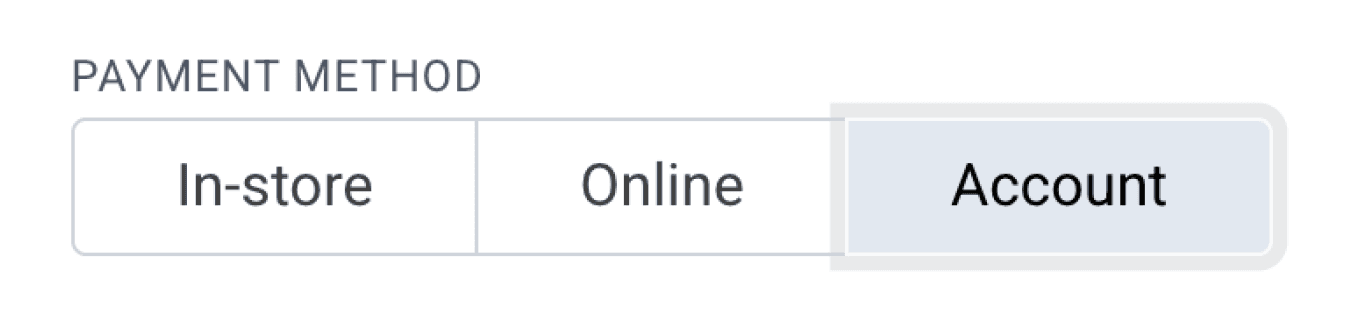
The default payment method will depend on the selected order flow under the order workflow settings. The payment method options will only appear on the orders page if it is enabled under the workflow settings. (Configure workflow basics)
If a default billing account is added on a workflow, the Account payment method will automatically appear on the orders page. As long as an account is associated with an order this payment method will be available. The Account the payment method will allow the order to be charged to the clinic’s account, and each transaction will appear on the account statements.
From the orders page
Clinic Orders: Payment and Delivery Method
Before proceeding with an order, it is important to confirm that both the delivery method and payment method are set correctly. These settings determine how the order is processed, billed, and fulfilled. The following examples outline common clinic order workflows used by premium sites, illustrating how delivery and payment responsibilities are configured based on clinic agreements.
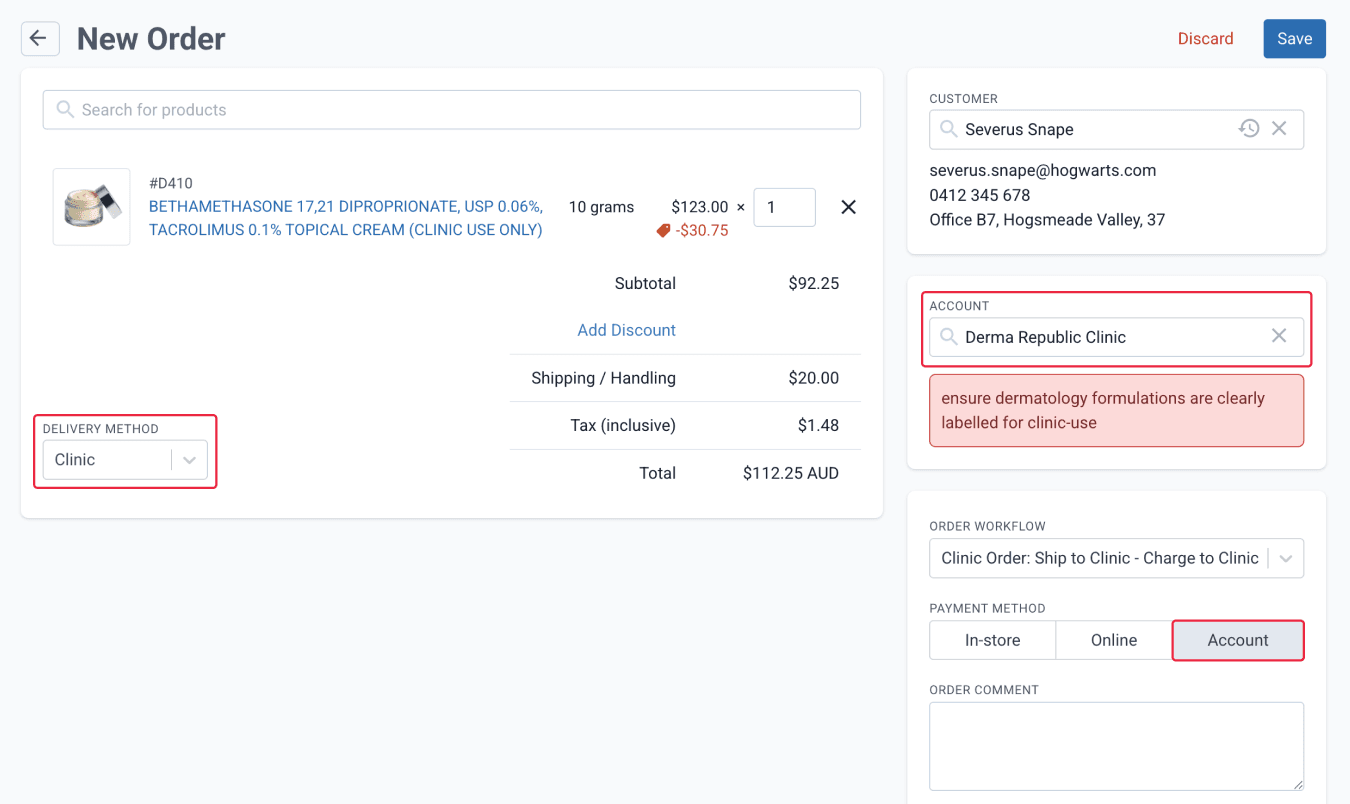
Charge to Clinic – Send to Clinic
Prescriptions are sent by the clinic, charged to the clinic account, and shipped back to the clinic for dispensing or collection.
For a detailed guide on setting up this type of workflow, see our blog Workflow Setup Guide: Charge to Clinic – Send to Clinic.
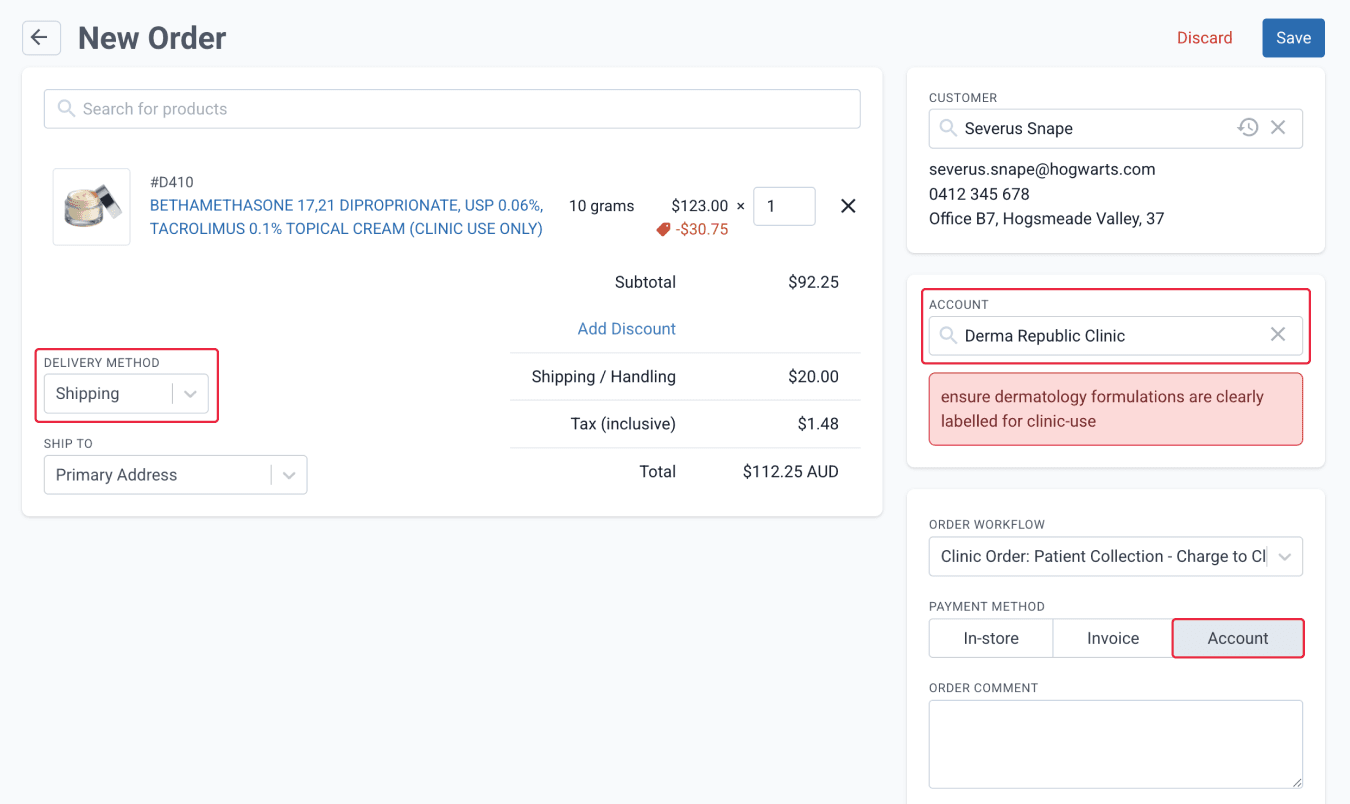
Charge to Clinic – Charge to Patient
Prescriptions are sent by and charged to the clinic, and the order is shipped directly to the patient.
For a detailed guide on setting up this type of workflow, see our blog Workflow Setup Guide: Charge to Clinic – Send to Patient.
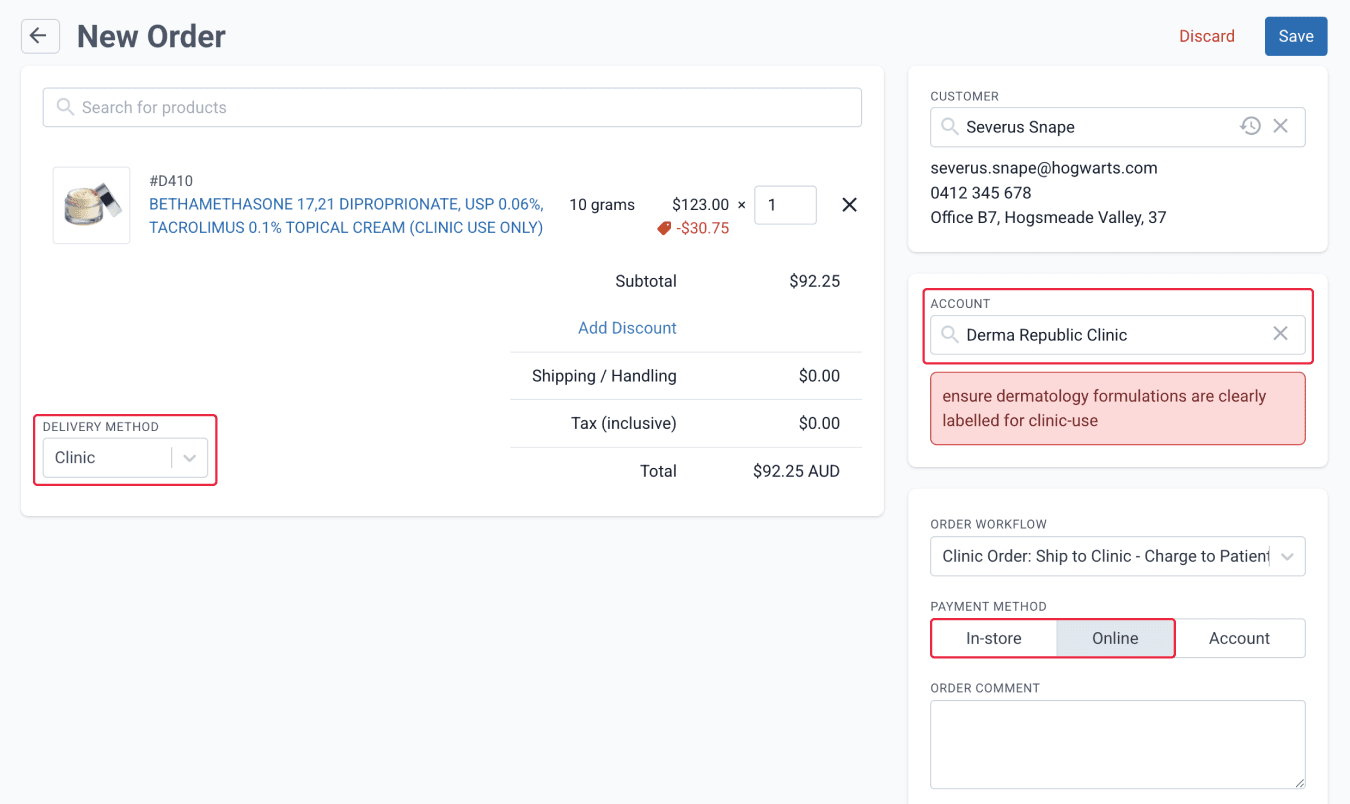
Charge to Patient – Ship to Clinic
Prescriptions are linked to a clinic, paid for by the patient either in-store or via online purchase link, and shipped to the clinic for in person dispensing.
For a detailed guide on setting up this type of workflow, see our blog Workflow Setup Guide: Charge to Patient – Send to Clinic.
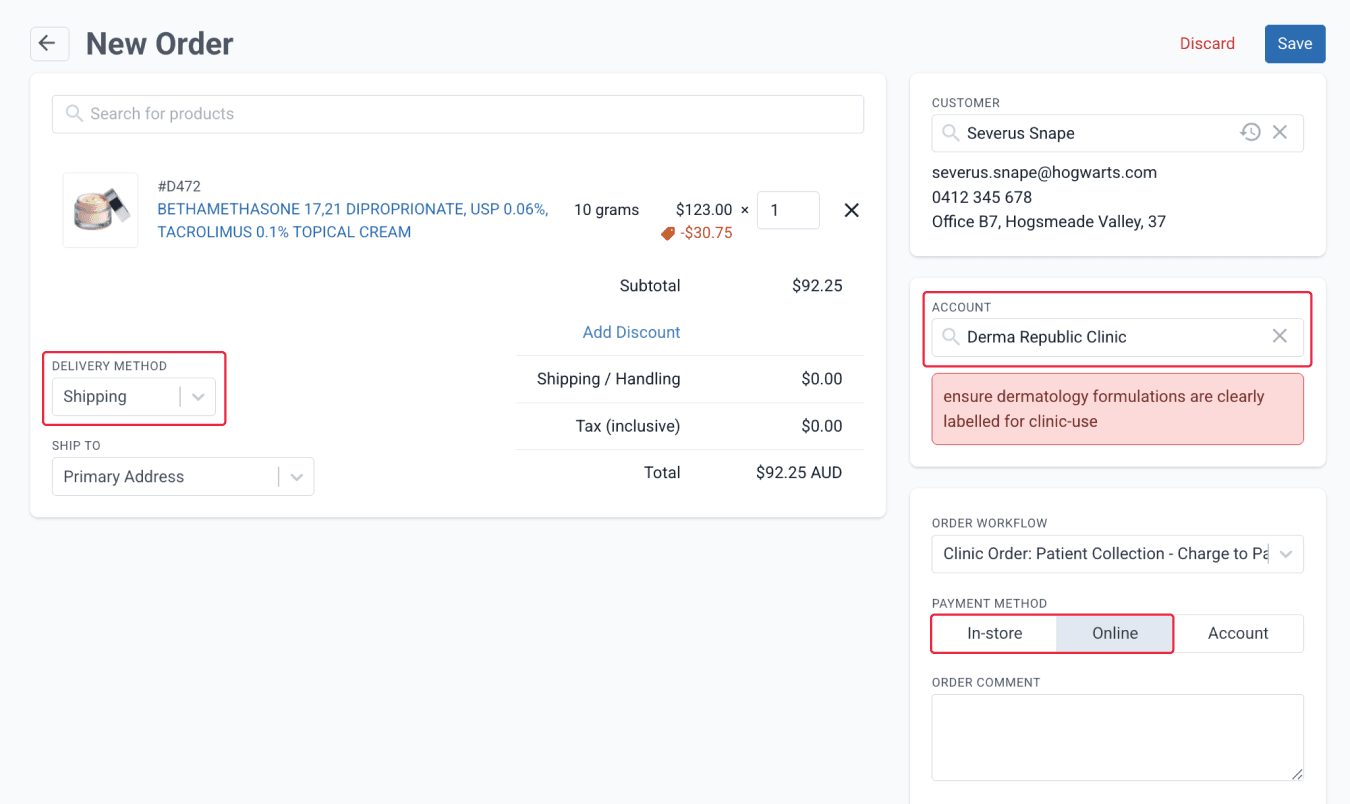
Charge to Patient – Send to Patient
Prescriptions remain associated with a clinic, but payment is completed by the patient, either in-store or via online purchase link, and the order is shipped directly to the patient.
For a detailed guide on setting up this type of workflow, see our blog Workflow Setup Guide: Charge to Patient – Send to Patient.
E. Tags
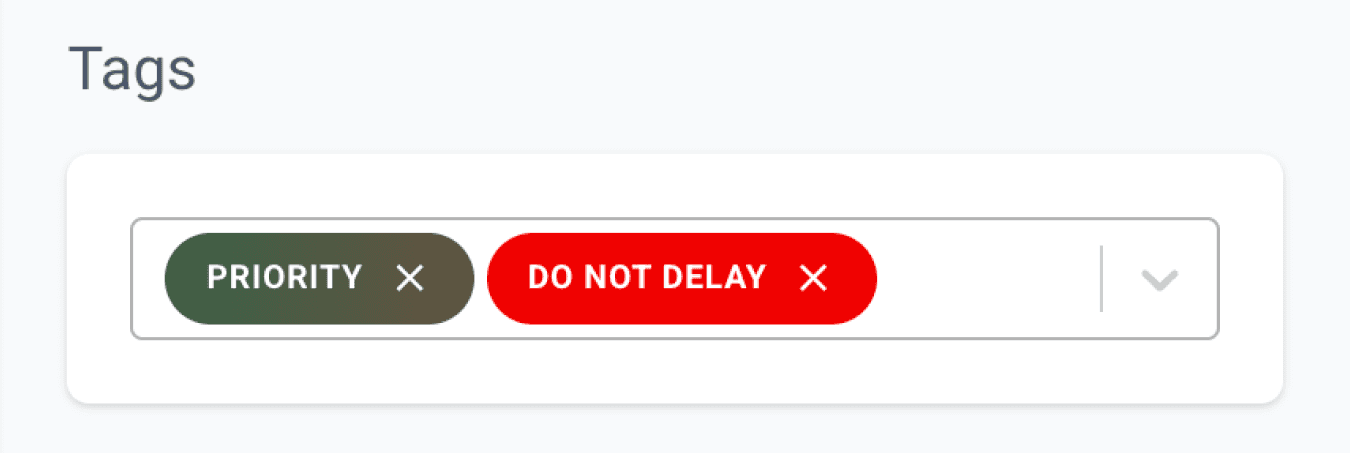
Once an order is saved, auto-tags that are added in the workflow (Set up auto-tags) will appear on the order page. You may also add additional tags if needed.
From the orders page
Discounts
Discounts applied to an order are not determined by the workflow. Instead, they can be configured on the Discounts page and Accounts page.
To learn more about setting up discounts, read our blog Compound Direct Order Discounts: Take control of pricing and promotions.
Before saving your order, ensure all order details, such as the customer name, order comment, and delivery instructions, are correct.
Important note: Delivery instructions added by staff on the Orders page will be overridden if the customer updates their delivery instructions on the checkout page.
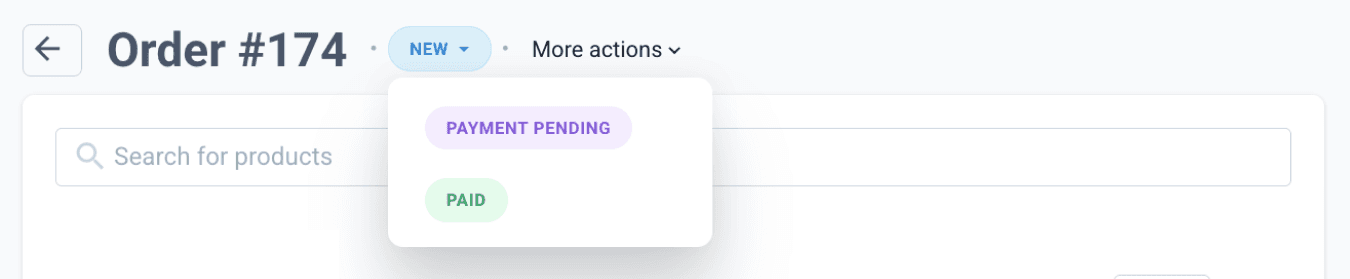
For orders created using the Payment Link or Invoice Link method, you may mark the payment status as Paid or Payment Pending while awaiting payment.
From the orders page
Stage 2: Sending the risk assessment survey and purchase link
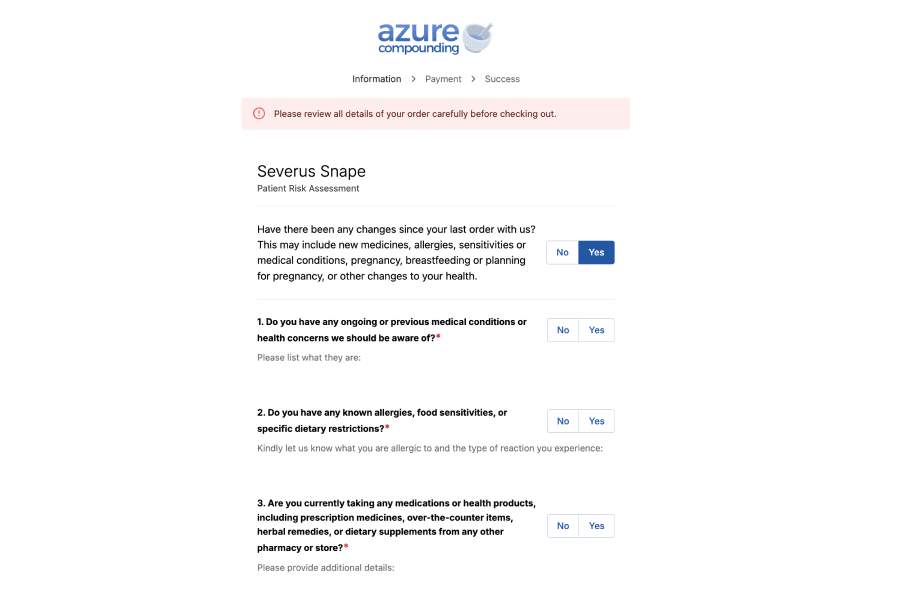
Before proceeding with an order, the patient may complete a risk assessment survey. This stage is skipped for orders where a risk assessment is not required, such as retail or over-the-counter (OTC) products. Risk assessment links sent to a patient can be configured under an order workflow (Select a risk assessment survey).
For clinic orders that are charged to the patient, and the payment method is online, the risk assessment links are sent along with the purchase link. When the payment method is online, the ‘Send Order’ button will appear, and you can proceed to send the purchase link, and risk assessment.
If an order includes multiple patients, each patient will complete a separate risk assessment survey using a single link.
From the customer checkout link
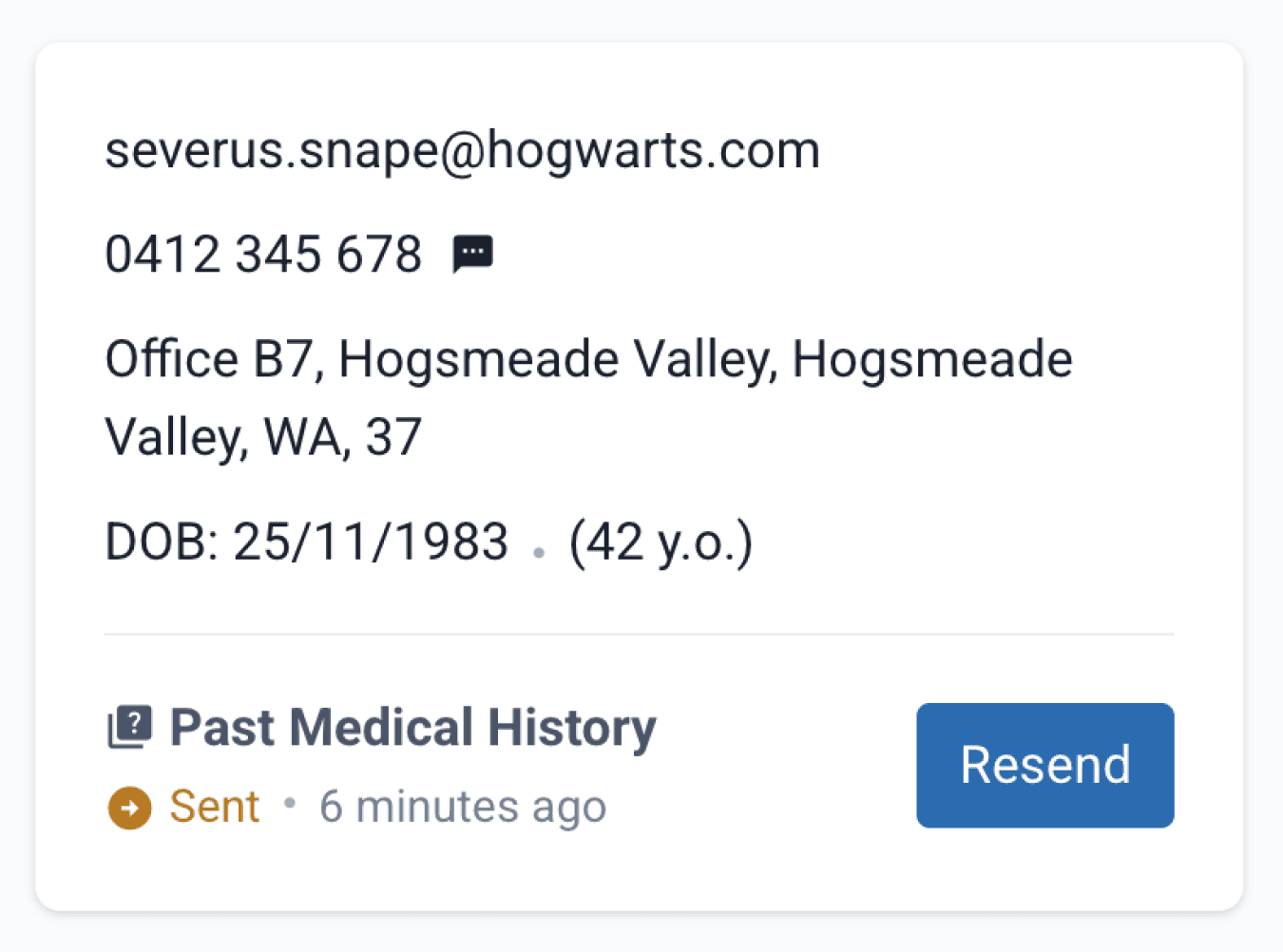
Otherwise, you can send or resend risk assessments directly from the Customer page.
From the customer page
Stage 3: Completing the payment
This stage covers how an order is paid, either by charging the patient directly or billing the clinic’s account. Payment options include in-store or online patient payments, as well as flexible clinic billing with configurable account charge triggers.
Charge to patient
For clinic orders that are charged directly to the patient, payment can be collected either in-store or online.
The in-store payment method allows customers to pay using cash, card, EFTPOS, or other payment methods processed outside of Compound Direct. Alternatively, the online payment method uses a secure purchase link, where customers can enter their card details and billing information remotely.
When charging a patient for an order associated with an account, you can choose to send the quote to the customer and also send a copy of the invoice to the account.
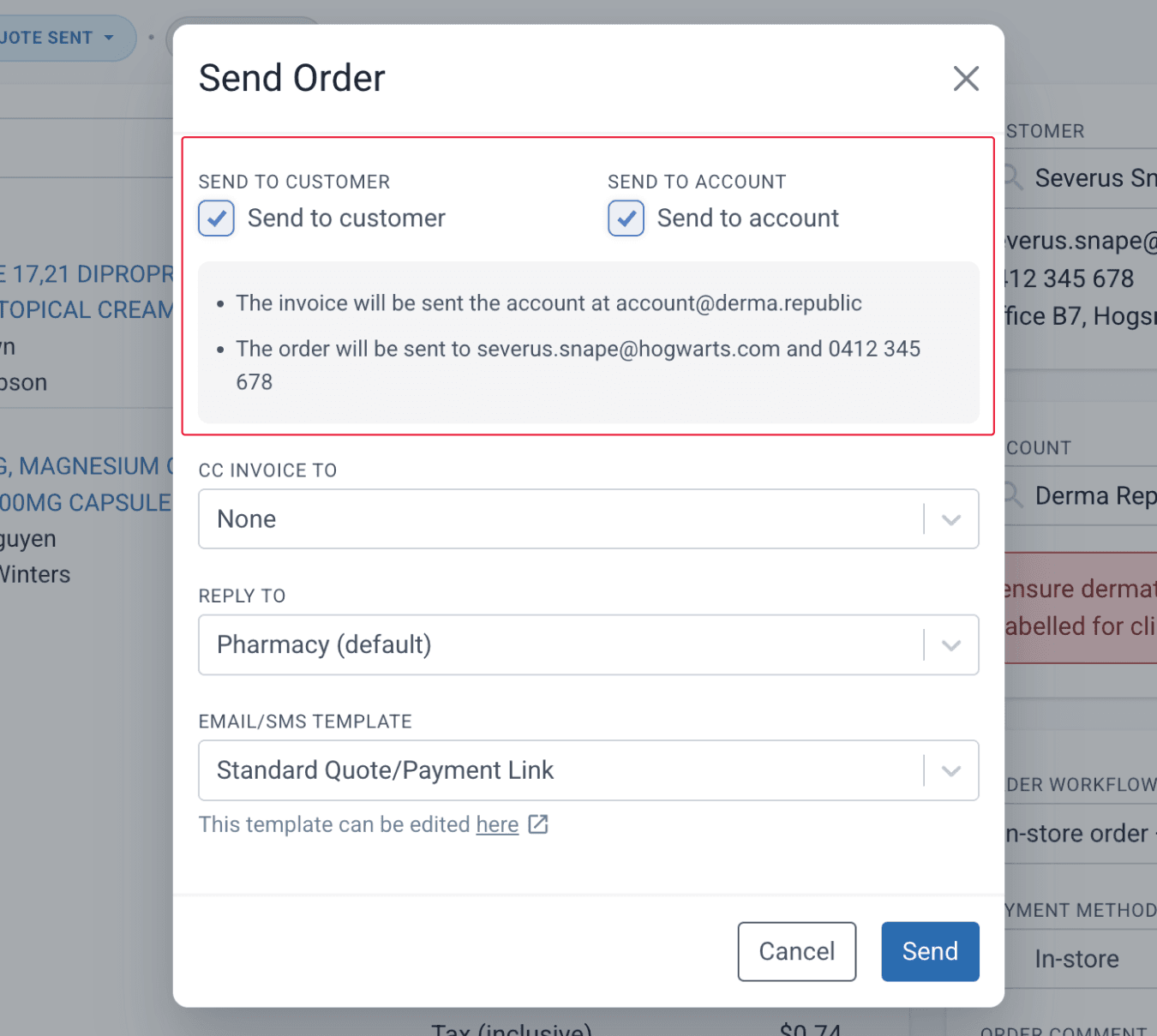
From the orders page
This topic is covered in more detail in the Payment Methods section of Order Workflows in Action: Processing in-store and online orders.
Charge to clinic account
The Account payment method bills the order to the associated clinic account. You can configure when the charge occurs by selecting either an automatic or manual charge trigger at different stages of the order lifecycle. Partial charges to an account are not supported.
Account Charge Triggers
You can choose when an order is charged to an account, giving you greater control over your billing process. Orders can be charged on creation or update, on fulfilment, or only when manually charged.
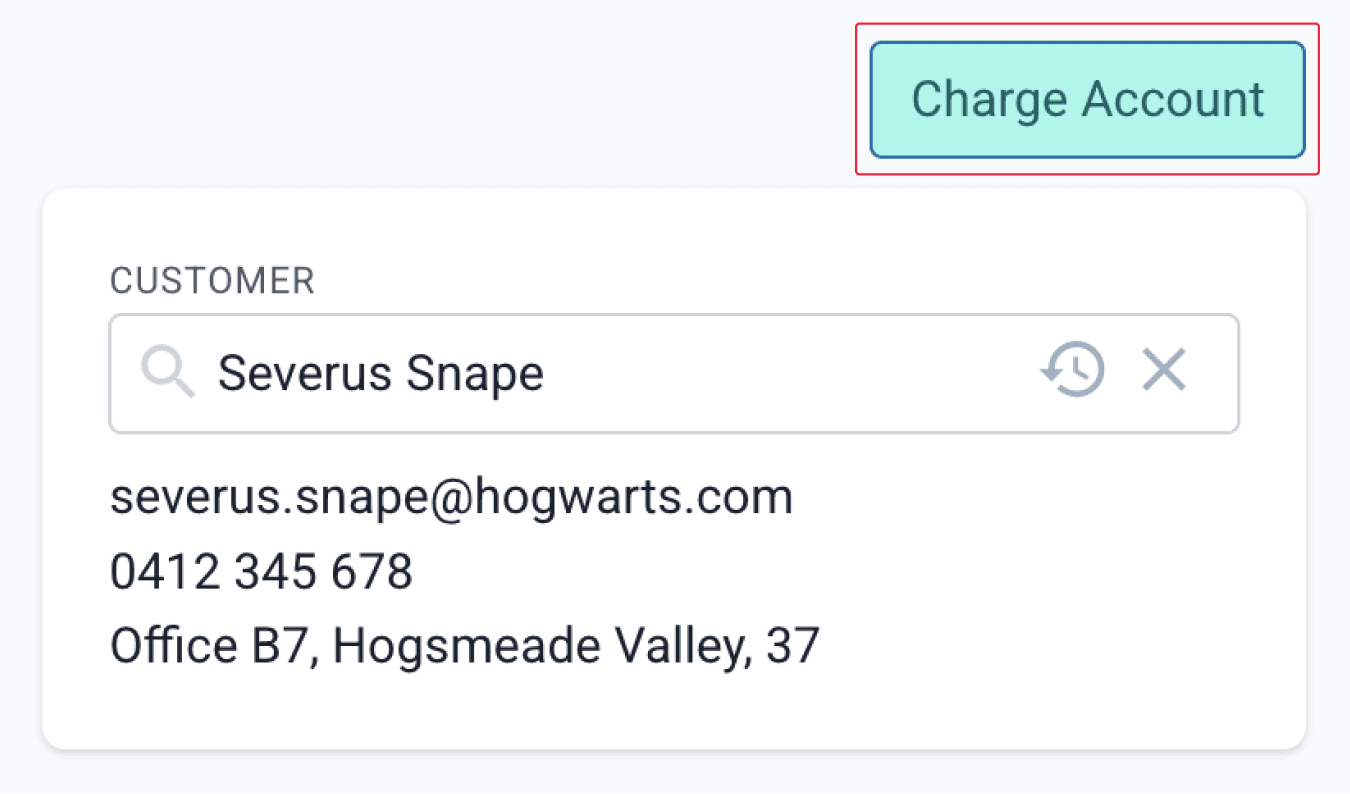
From the orders page
Once the account has been charged, an Account and Paid status badge will appear at the top of the order page, indicating that billing to the account has been completed.

You can refund a transaction by clicking on the transaction and then selecting the ‘Refund’ button. In the refund modal, enter the amount to be refunded. When processing a refund, you may add a note to explain the reason or include any relevant documentation. These notes can be edited even after the refund has been completed. Partial reversal of charges are not supported.
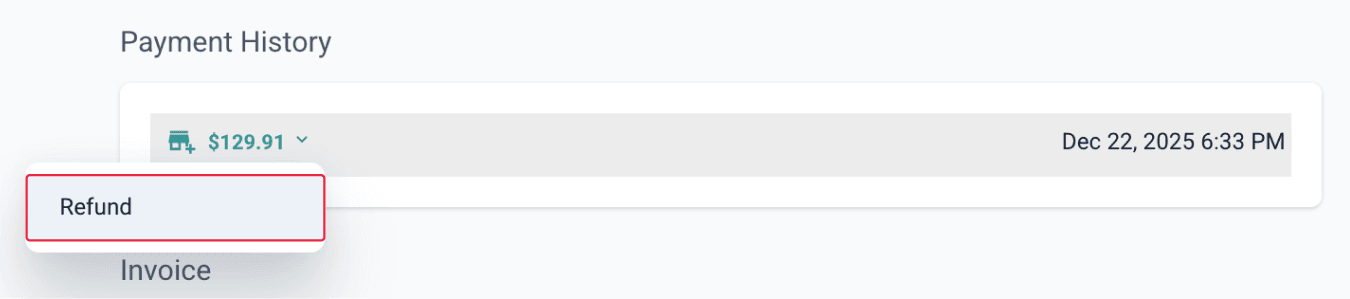
From the orders page
For refunds that are expected to be paid at a later stage, you can mark the order as ‘Pending Payment’ after the refund is processed.
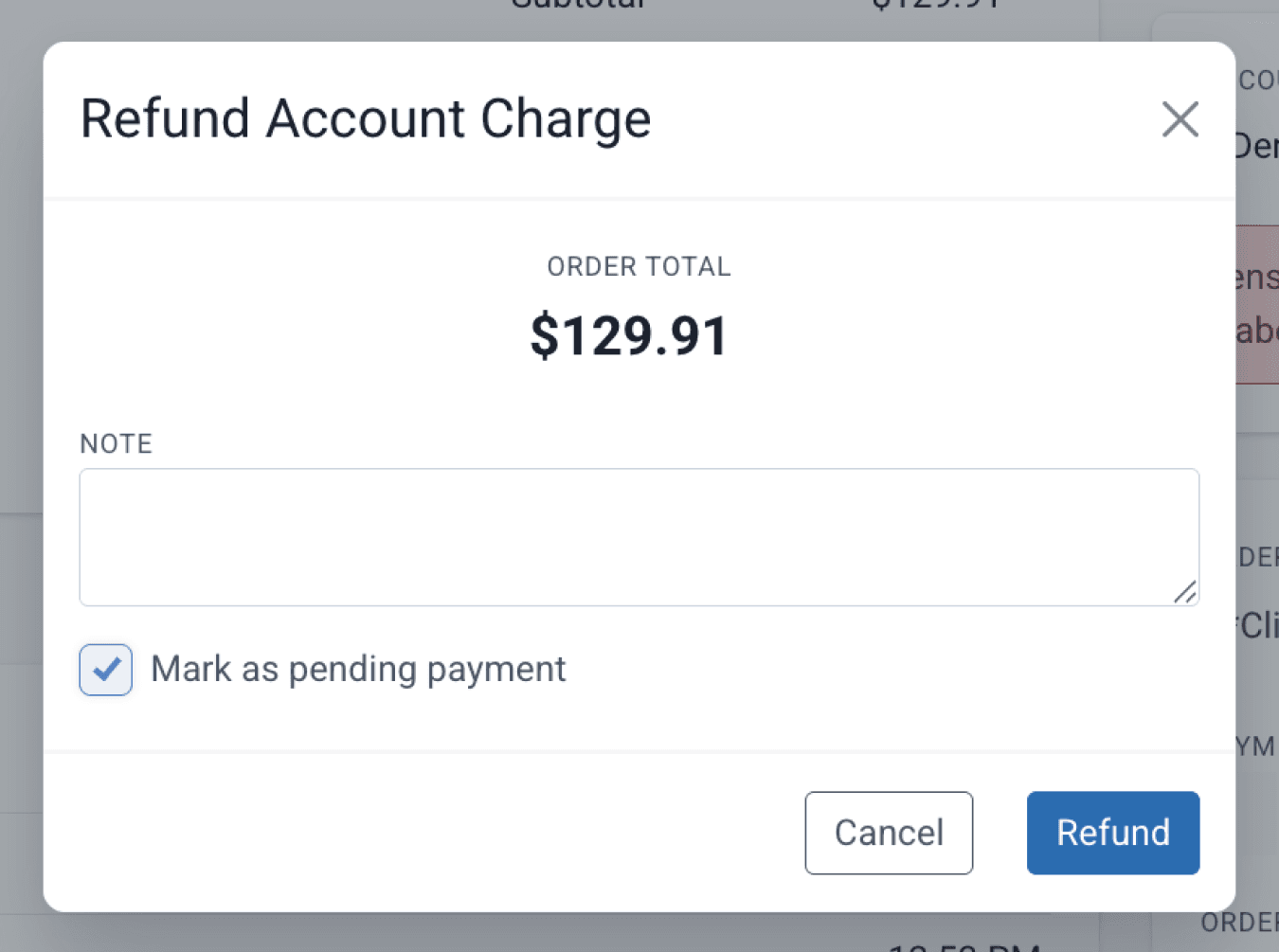
From the orders page
Otherwise, the order will be marked as ‘Refunded’, with the status badge displayed next to the order number.

From the orders page
Payment History
All payment transactions, including in-store and online payments, charges billed to an account, and refunds, are recorded under Payment History for easy tracking and reference. From this section, you can also add or edit notes on each transaction.
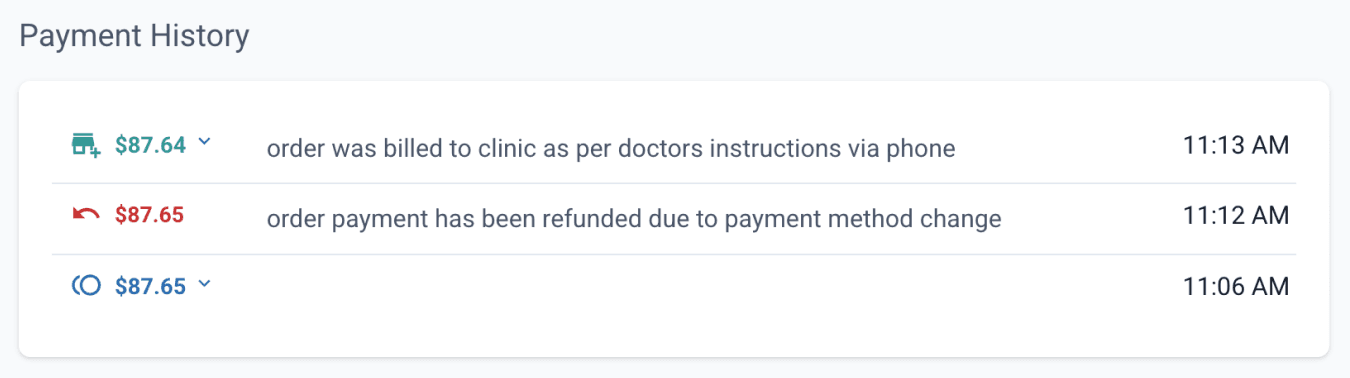
From the orders page
Reversal of charges
In some cases, an order may be saved with an incorrect payment method and you may need to reverse the charge and apply the correct payment method.
If a charge reversal is processed on the same day, the payment or charge is reversed without creating a record in the payment history or account statements, except when charging on fulfilment or when an account is charged manually.
Charge reversals made after the same day are recorded and will appear in payment history and account statements.
Updating the charged amount
If the order price is updated on the same day the charge is applied, the adjustment will not appear in the payment history or account statements, except when the account charge trigger is set to charge on fulfilment or when the account is charged manually. Price updates made after the same day are recorded and will be reflected in payment history and account statements.
When a saved order has payment transactions from in-store or online payment methods and is then edited to be charged to an account instead, the change cannot proceed unless the existing transaction has been refunded.
Order Invoice
An invoice is automatically generated and displayed on the orders page for easy access and reference. Default invoice templates can be configured in your workflow settings, allowing you to select the type of invoices you want to use for your orders (Configure workflow basics).
Invoices can also be sent to the customer when ‘Invoice Link’ is selected as the payment method in the order flow (Configure workflow basics). In this case, the pre-selected payment method on the order page will be Invoice, and the customer will receive a copy of the tax invoice when the order is sent, rather than a payment link.
You can also ‘Schedule Send’ an invoice similar to scheduling send a quote.
Invoice links sent to the customer will also appear under ‘Text Messages’ on the customer page.
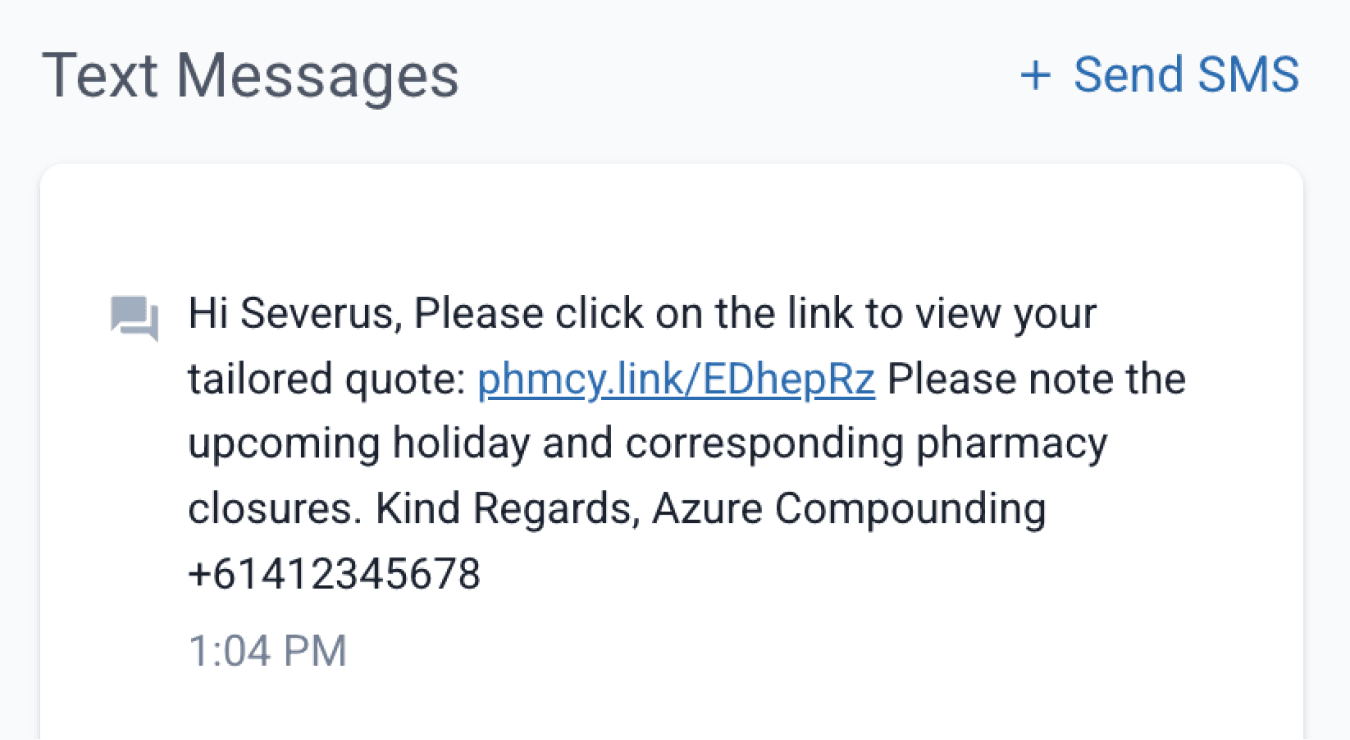
Order confirmation
Orders that have been marked as Paid, Partially Paid, Payment Pending, Refunded, and Partially Refunded are considered confirmed. The customer may receive an order confirmation message informing them that payment has been received and outlining the expected preparation time. This automated confirmation message can be configured based on the communication settings enabled in the order workflow (Set up communication settings).
Email correspondence may be addressed to someone other than the patient. For example, the patient may be the daughter while the customer is the mother, or the customer and account may be a veterinary clinic, with the patient recorded as the owner or animal.
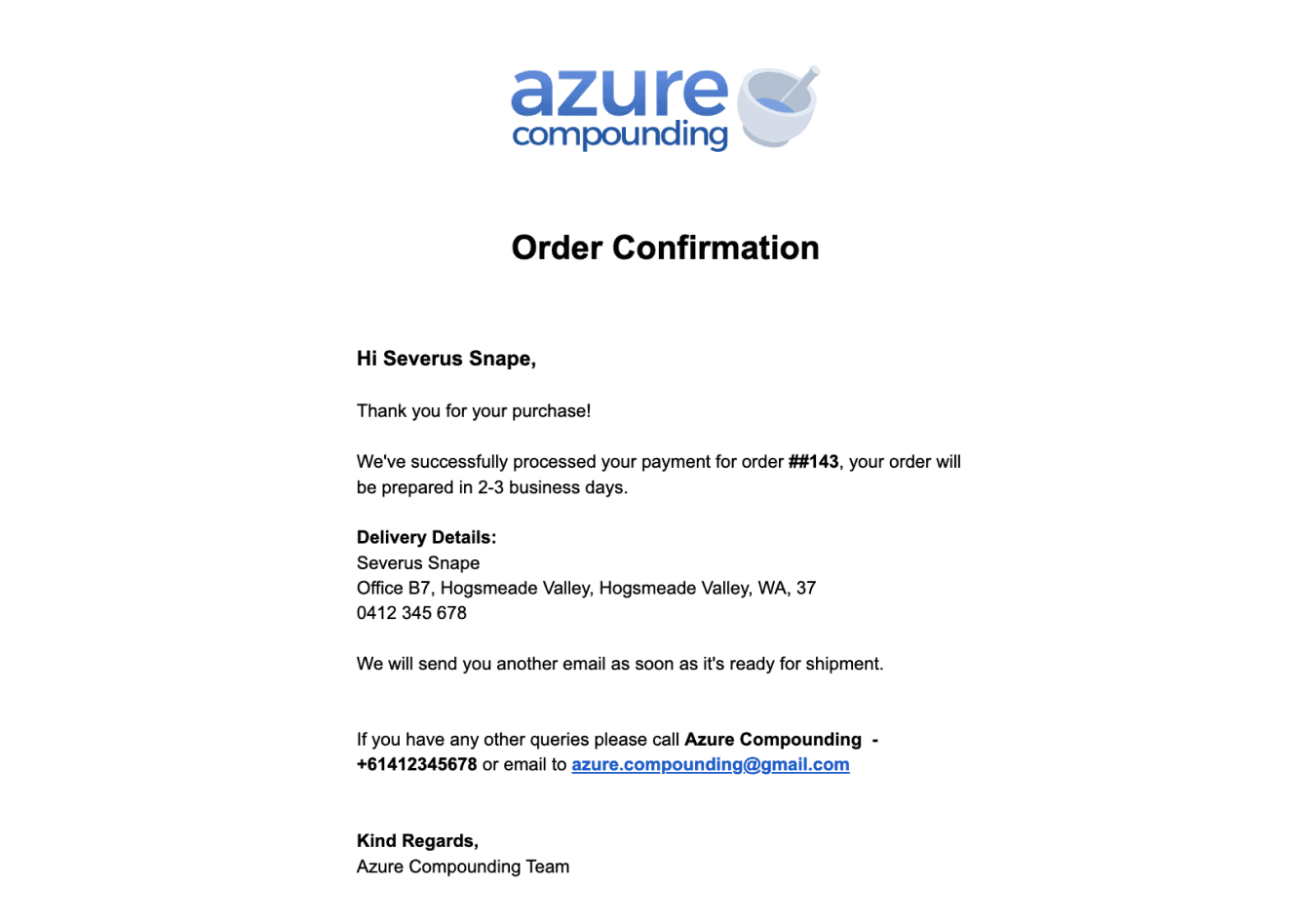
From the customer email
Stage 4: Dispensing the order
Once payment has been completed, the script can now be dispensed. From the Dispensed page, the pharmacist can review the risk assessment before proceeding to preparation. Products that do not require compounding can skip this step and proceed directly to fulfilment.
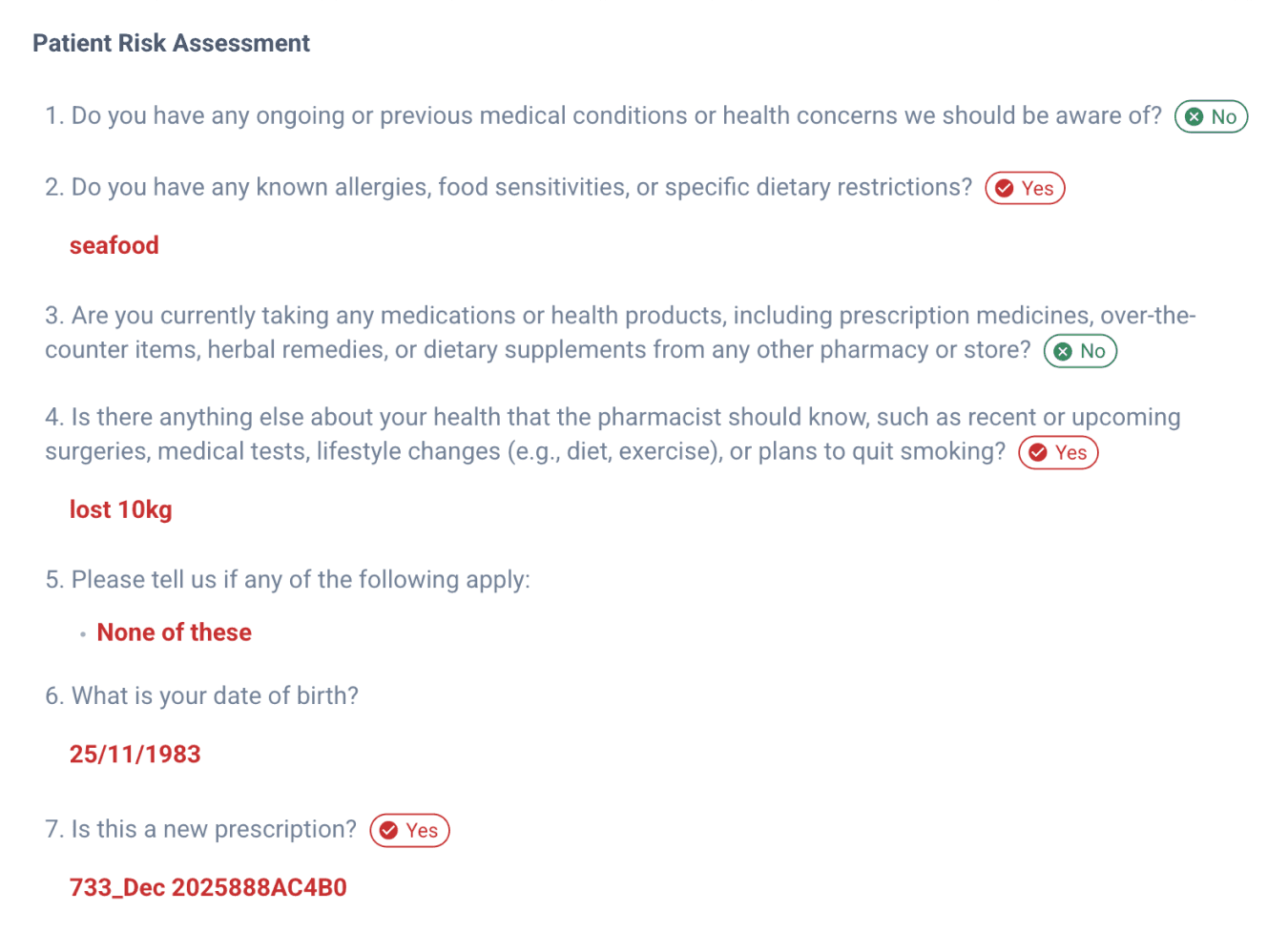
From the dispensed page
Stage 5: Fulfilling the order
Once the dispensed script has been prepared, you can proceed to ‘Fulfil’ the order. Orders can be viewed and fulfilled directly from the Orders page. You may also view and fulfil the order from the Orders dashboard, Drafts, and Dispensed page.

From the accounts page
When fulfilling an order that has not been signed off, a warning will be displayed on the sign off modal. From this modal, you can choose whether to notify the customer that the order has been fulfilled.
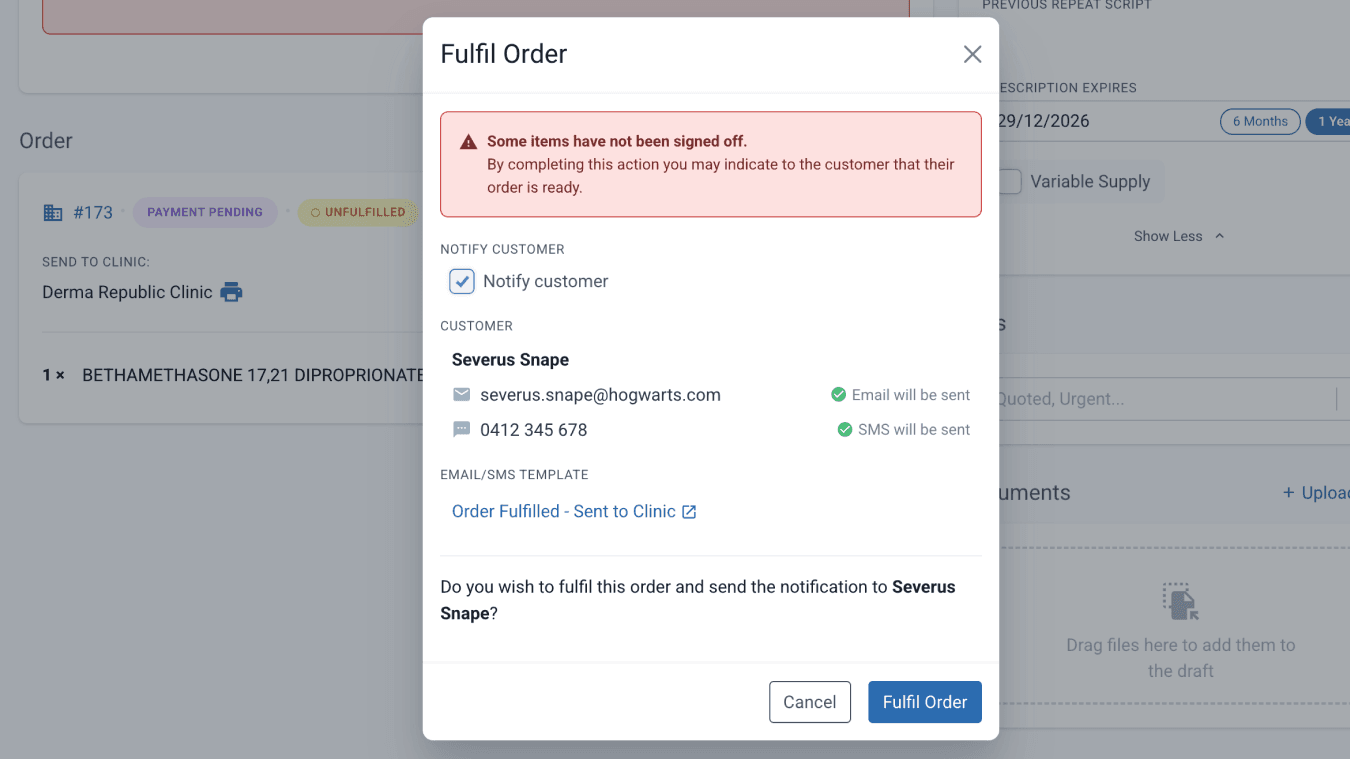
From the dispensed page
Order fulfilment notification
Once the order is Fulfilled, the customer may receive an order fulfilment message informing them that the order has been completed and is ready for shipping or collection. This automated message can be configured based on the communication settings enabled in the order workflow (Set up communication settings).
If the order is set for shipping, it will be automatically archived once it is marked as fulfilled.
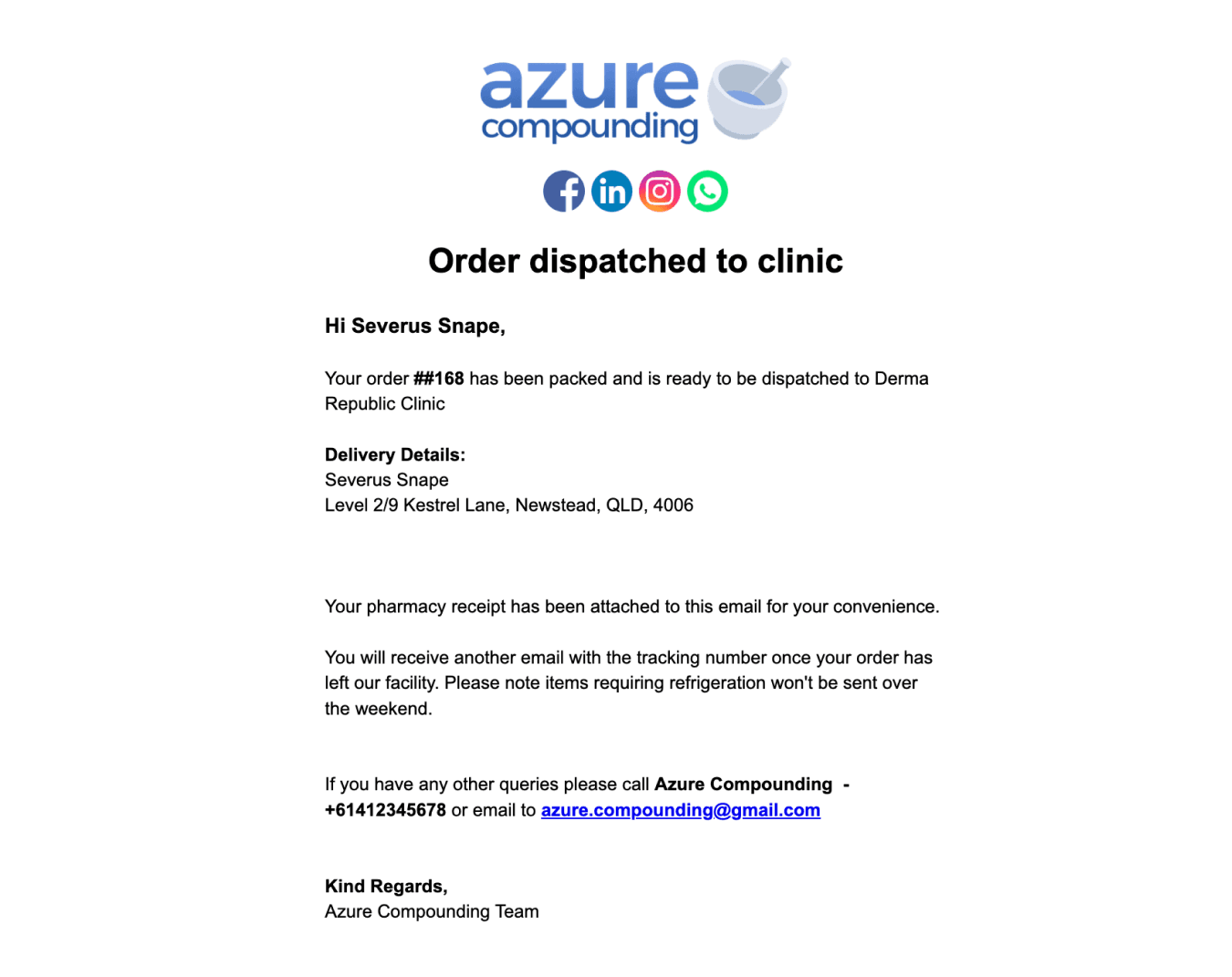
From the customer email
The fulfilment stage of an order is discussed broadly on our blog: Order Fulfilment: Complete orders with ease in Compound Direct.
You may customise an auto-archive period for unfulfilled orders under the order workflow settings (Workflow automations).
If the order delivery method is pickup, the ‘Order Collected’ button will appear once the order is fulfilled. After the order is marked as collected, it will be automatically archived.
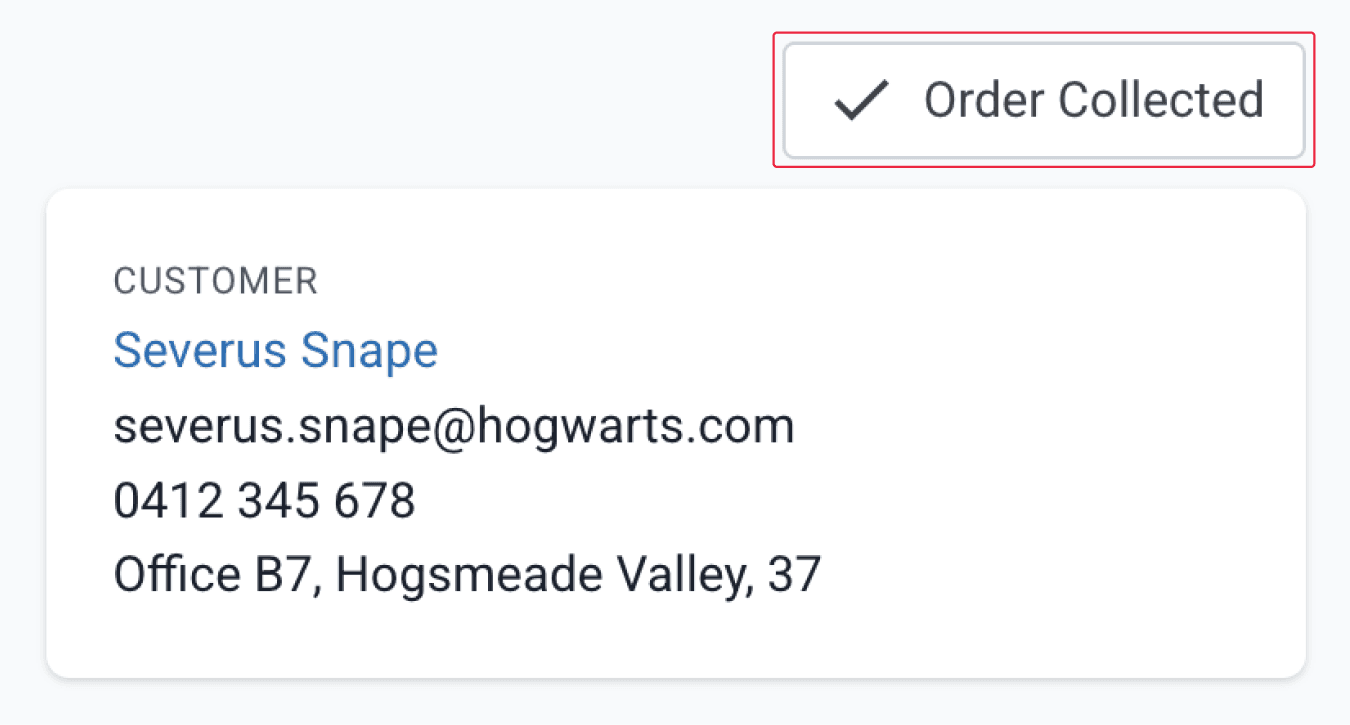
From the orders page
The ‘Order Collected’ button can also be found from the Orders list.

Order receipt, tickets, and packing slips
The system supports printing key order documents and slips, including Transaction Receipts, Order Tickets, and Packing Slips, to support payment, fulfilment, and dispatch workflows.
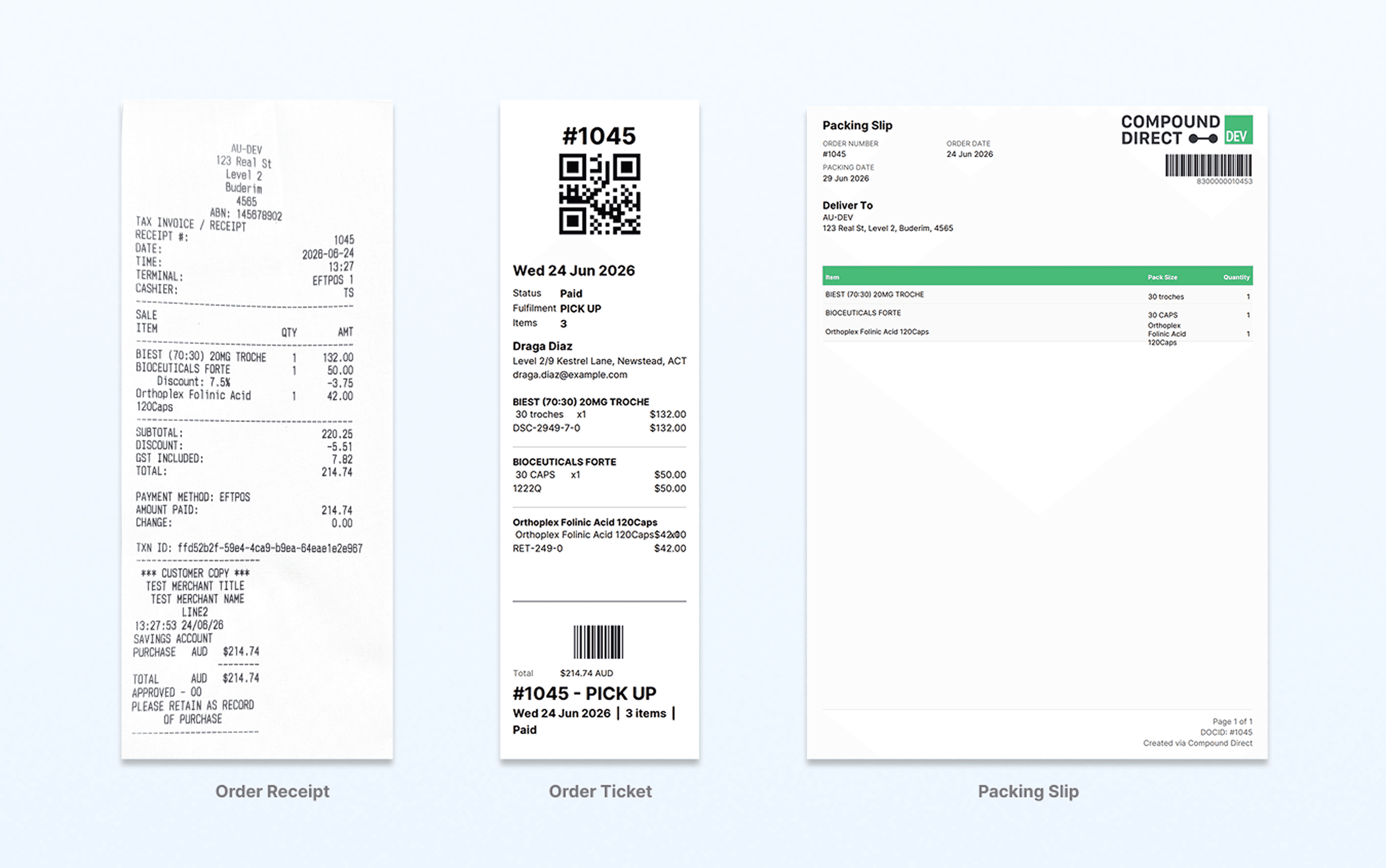
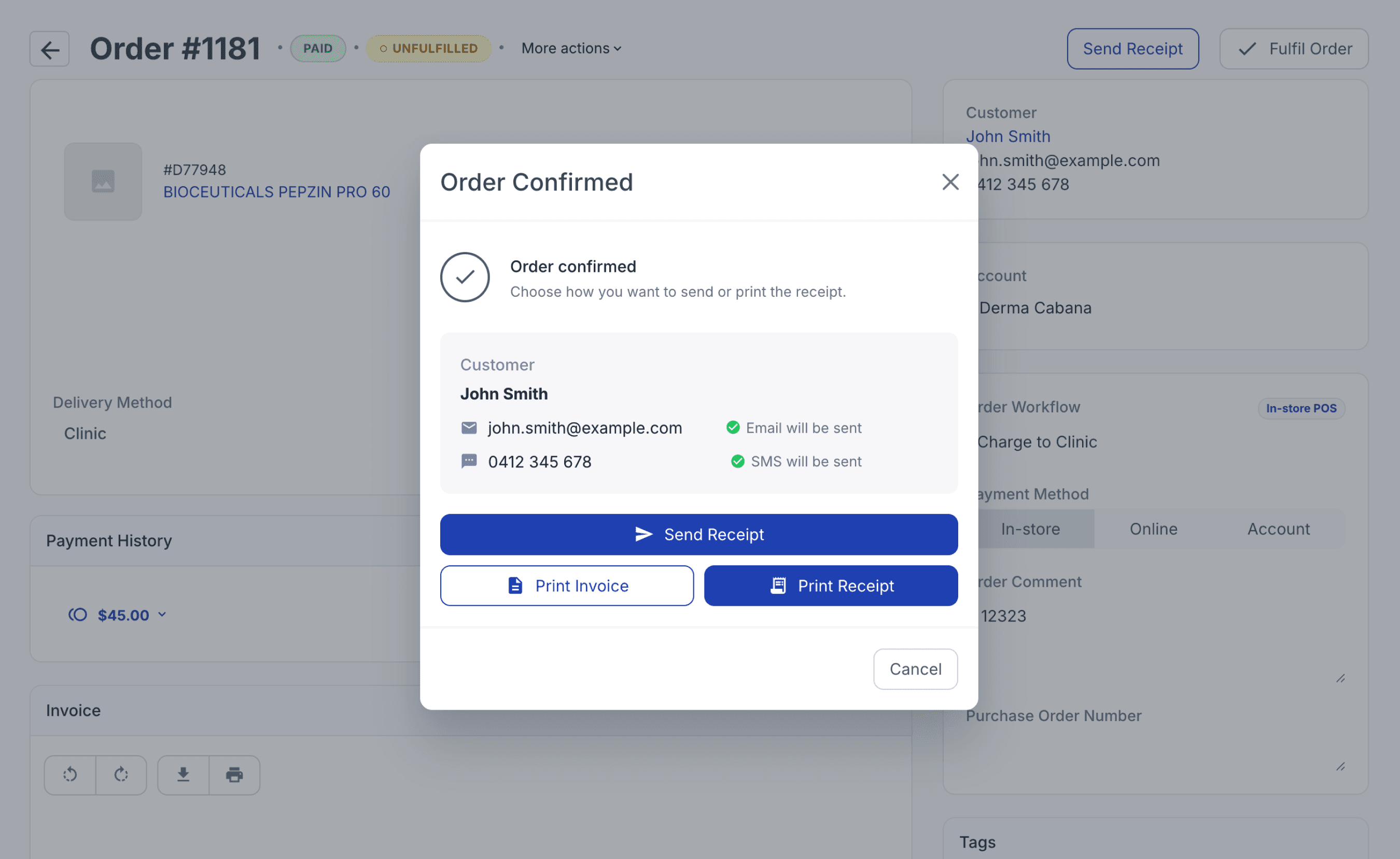
Order transactions receipt
Order Transaction Receipts provide a detailed record of an order payment, including purchased items, quantities, discounts, tax, payment method, transaction details, and terminal information where applicable.
To print an order receipt, click on the ‘Send receipt’ button then select ‘Print Receipt’.
Order tickets
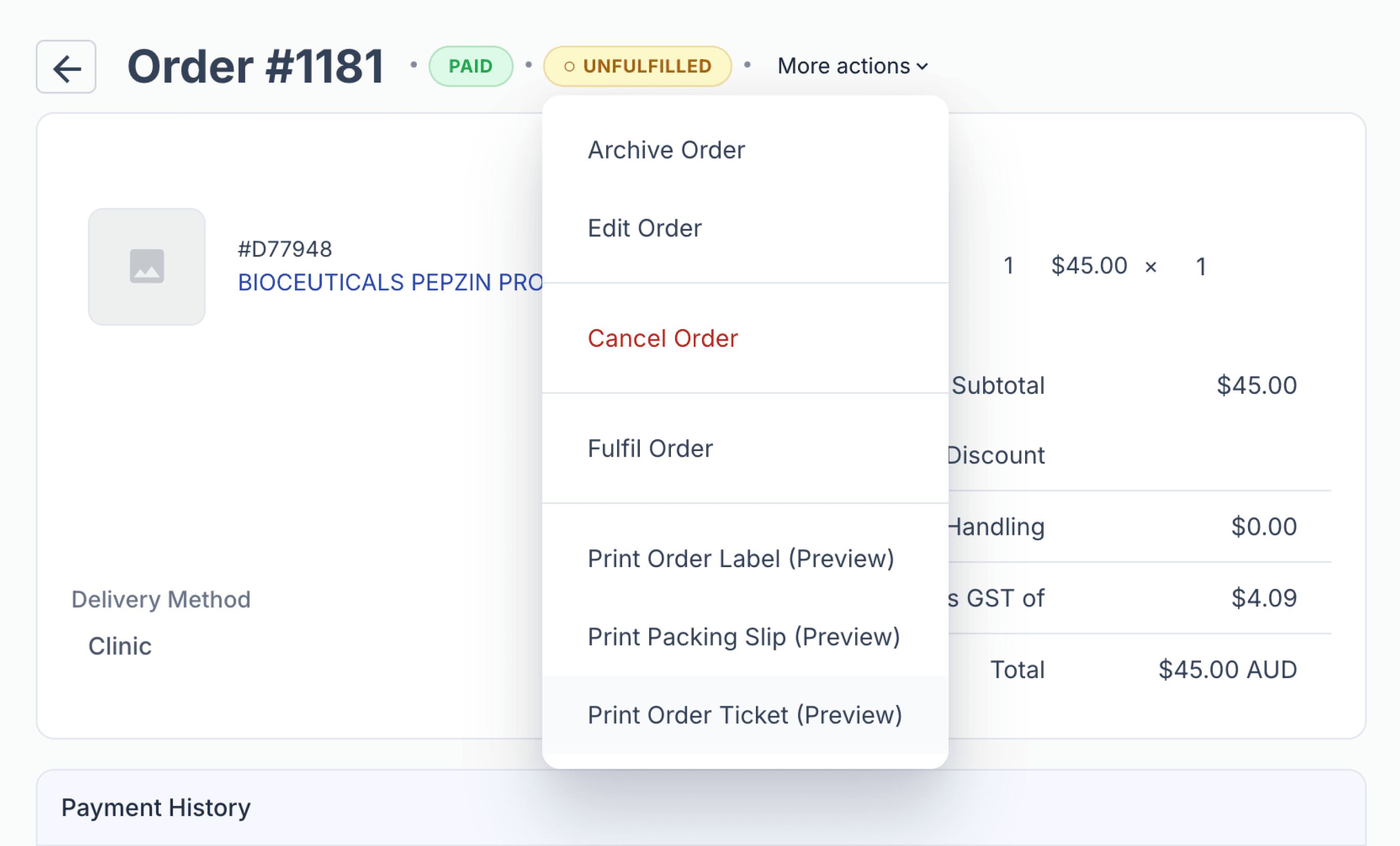
Order Tickets provide fulfilment staff with the information needed to prepare orders, including order details, line items, quantities, and delivery instructions.
Packing slip
Packing Slips provide a customer-facing document to accompany the order during dispatch or collection.
To print an order ticket or a packing slip, click on ‘More Actions’.
Bulk printing orders
You can also print Order Tickets, Packing Slips, and Invoices in bulk from the Orders Dashboard. Select the orders you want to print, and the ‘Print Order’ button will appear in the top-left of the dashboard.
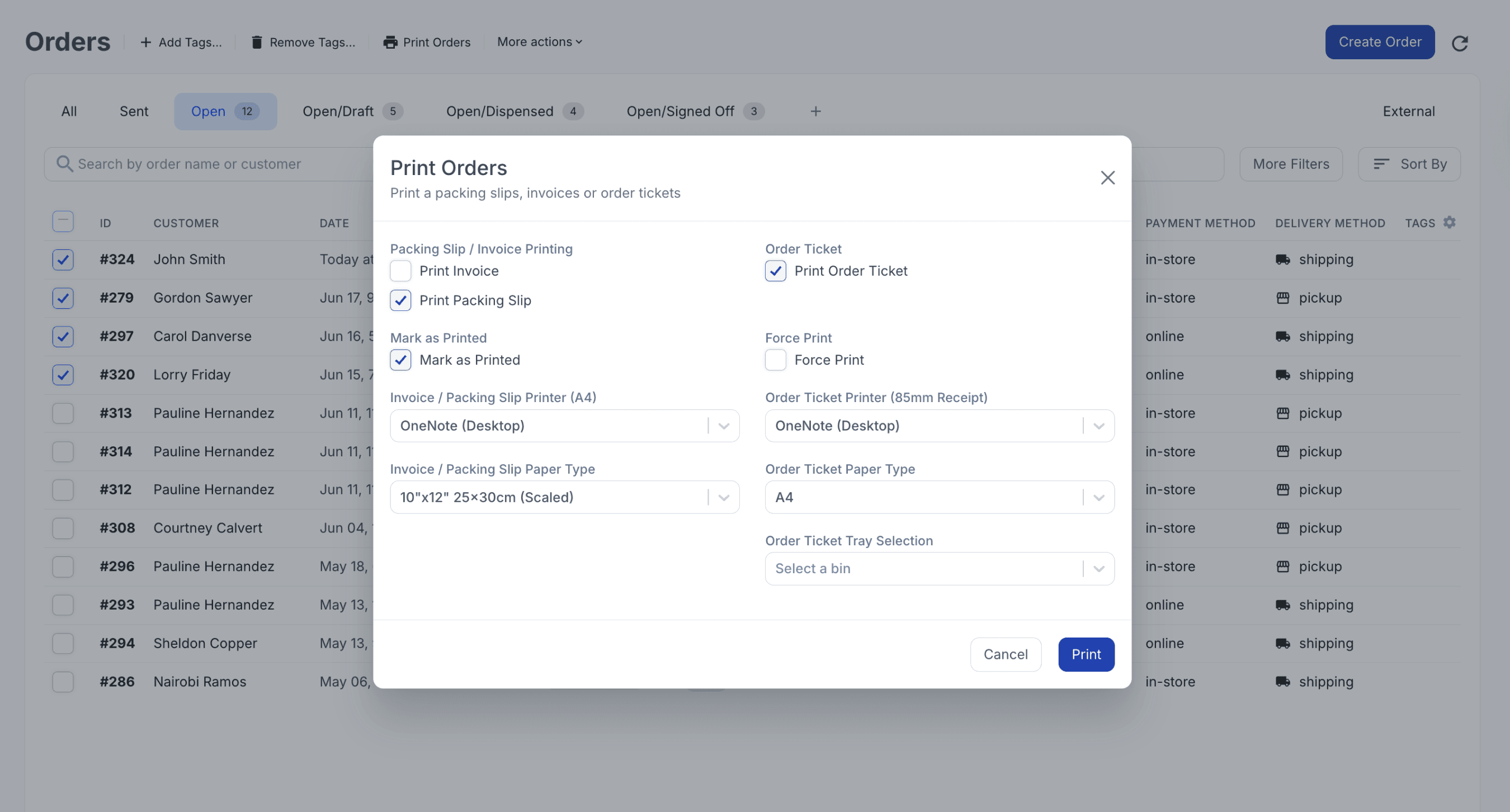
From the orders dashboard
Retention emails
Retention emails can be sent to maintain engagement and may also be used for relationship-building or educational purposes, helping to ensure a smooth and consistent customer experience.
Customer order overview
Orders for a customer appear in the Customer page overview, providing a quick snapshot rather than a full list and offering a reference for support calls or order issues. Recent orders remain visible for about one week, while unfulfilled orders are shown for approximately 30 days. To view a customer’s full order history, search for their profile on the Orders page.
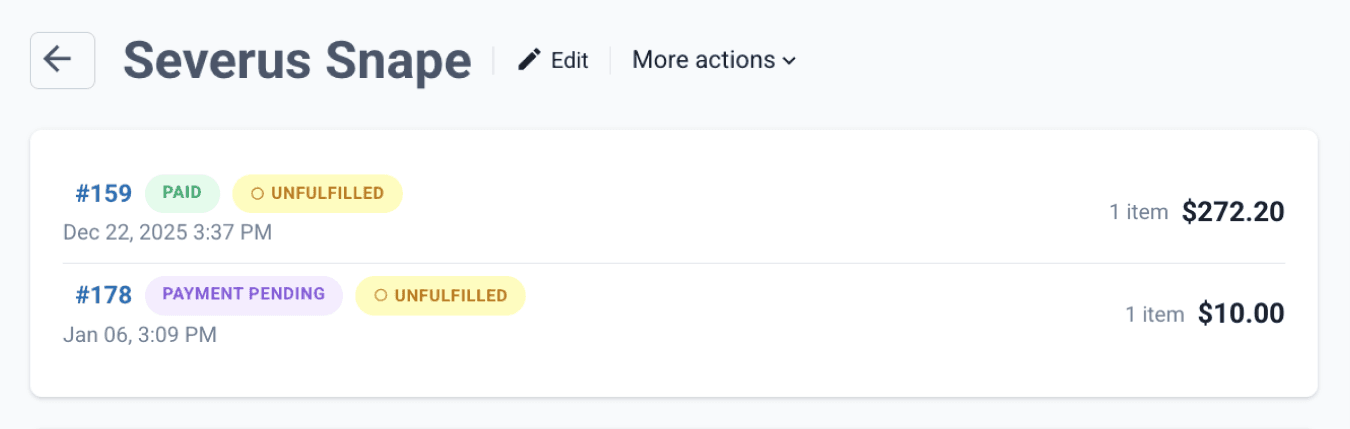
From the customer page
Exporting orders
Orders can be exported with comprehensive data, including customer details, pricing, shipping and tracking information, discounts, payment activity and detailed line item records. This enables pharmacies to customise reports based on their operational, financial and reporting requirements.
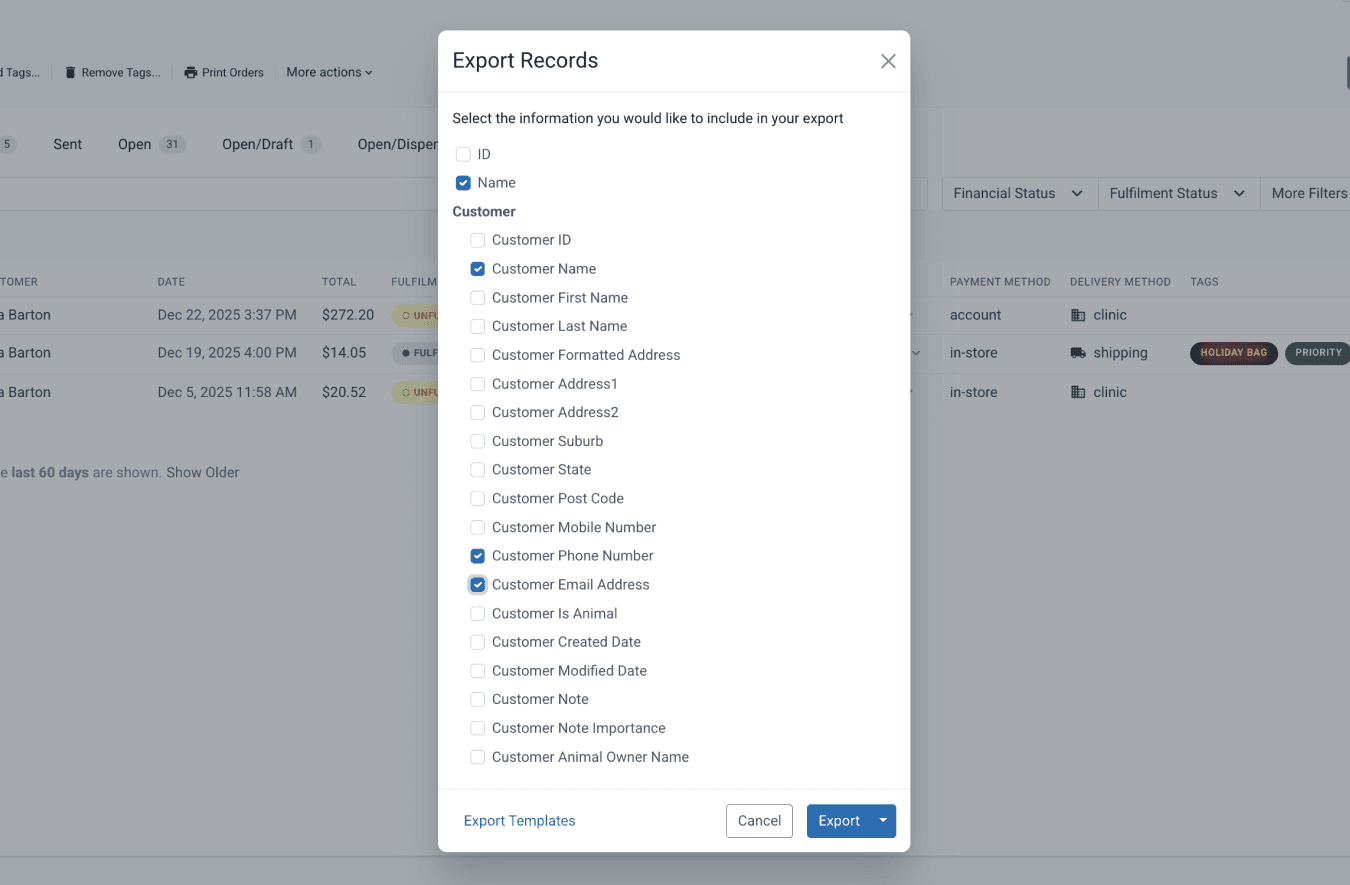
From the orders dashboard
Deleting and cancelling orders
An order can only be deleted if it has not been confirmed, meaning it has not been paid, marked as paid, or set to payment pending. Confirmed orders cannot be deleted and must be cancelled instead. Refunded and partially refunded items are still considered confirmed unless they are cancelled.
Once an order is cancelled, a ‘Cancelled’ status will appear next to the order number. If the cancelled order has no associated payment transaction, both ‘Cancelled’ and ‘Voided’ statuses will be shown. Cancelling an order is permanent and cannot be undone.
Summary
Clinic orders in Compound Direct are managed through tailored workflows that differ from standard pharmacy orders, ensuring clinic level accountability while allowing flexible billing and delivery options. This blog walks through each stage of the process, from order creation and workflow selection through payment, risk assessment, dispensing, and fulfilment, highlighting how automations streamline communication, billing, and operational efficiency. The article also outlines common clinic scenarios such as charging clinics versus patients and shipping to clinics versus patients, and explains how configurable workflows, accounts, discounts, and charge triggers help premium sites maintain consistency, accuracy, and oversight across all clinic linked orders.
All names and medical data shown in software screenshots are fictional and for demonstration purposes only. These figures represent fictional persons; any resemblance to real individuals is purely coincidental. Use of existing fictional names is for illustrative purposes and does not imply affiliation or endorsement.