
The Hidden Costs of Manual Compounding: A smarter way forward with Compound Direct

If your pharmacy still relies on handwritten logs, mental calculations, or spreadsheets for inventory, pricing, and compounding, it may be time to take a closer look at the hidden impacts of these manual processes. While they may appear straightforward, manual methods can introduce inefficiencies that increase risk, create waste, and limit overall operational performance.
Relevant issues, such as a missed decimal point, expired ingredients, and underpricing, can quickly accumulate, affecting patient safety, compliance, and profitability. In this blog, we explore the hidden costs of manual compounding and outline how a more systemised approach with Compound Direct can help pharmacies operate with greater accuracy, efficiency, and confidence.

Ingredient waste
Ever had an experience when a staff member accidentally weighed 0.5g instead of 0.05g of an expensive active pharmaceutical ingredient (API)? The entire preparation would be discarded, leading to wasted ingredients and accumulated costs.
These kinds of errors often happen when:
- Weighing is done manually or with inadequate systems
- Calculating preparations are not automated
- Handling complex compounds with many ingredients
- Increased volume of compounds as the pharmacy grows
How can we avoid this as the business scales? Compound Direct gives you options to reduce risks that erode your profit margins over time.
Integrated digital balances
Compound Direct’s integrated balance and real-time calculations help prevent these costly mistakes by automatically recording ingredient weights as they are measured.
The quantities used are deducted from the ingredient’s stock on hand in real time, ensuring inventory always reflects actual usage and remains accurate.
Integrated balances reduce the risk of:
- Damaging reputation via patient reviews
- Legal consequences or formal review
- Compounds needing to be remade
- Not having proof of what exactly was weighed
- Incorrect batches used
- Older batches not being used up first
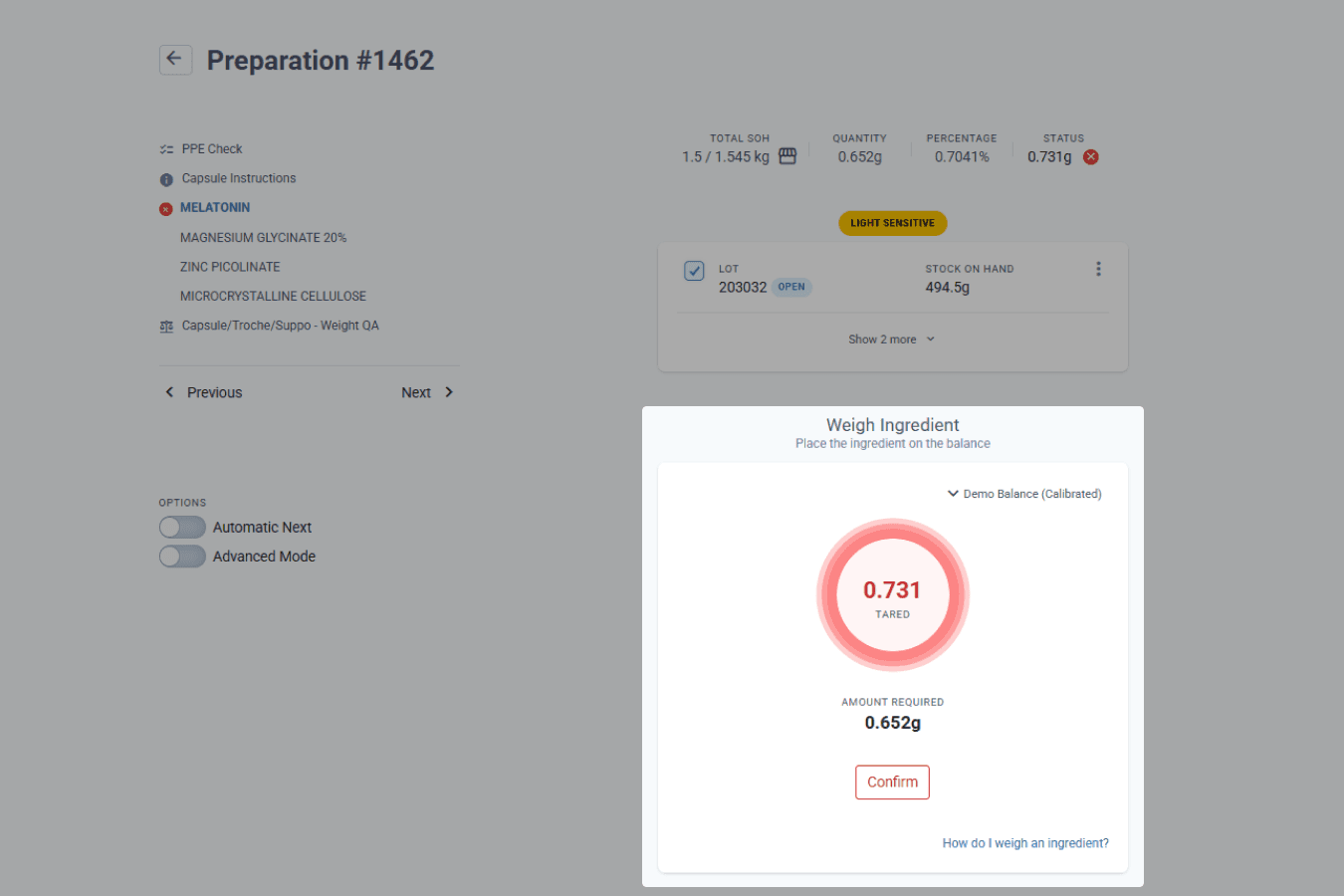
Compound Direct prompts the technician that the amount required is not met based on the weight on the balance.
Real-time inventory tracking
Every ingredient weighed, used, adjusted, or discarded is automatically recorded in the usage history, ensuring inventory remains accurate and up to date. Compound Direct provides clear visibility into both stock that is available for immediate use and stock that is not approved or currently on order, supporting better oversight of inventory levels.
The system also alerts staff before ingredients expire or when stock levels are low, enabling more efficient usage, reducing waste, and helping lower costs over time.
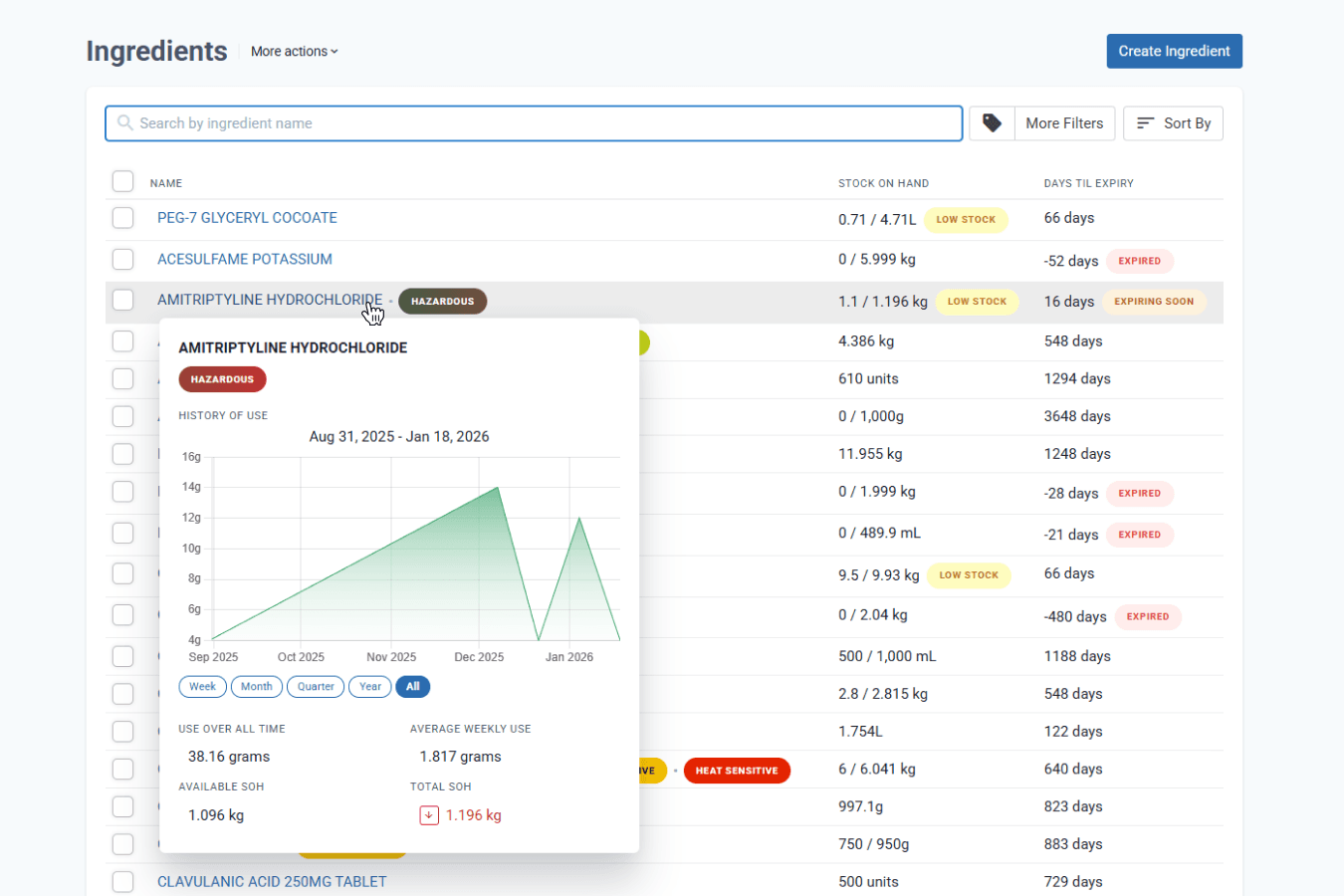
On the ingredients page, you can see the available (approved and ready stock) and total stock on hand (all stock, including unapproved and stock on order).
Time is Au
Preparation with no automation often leads to significant delays. A simple phone call request for a unique strength combination for a size #1 capsule requires manually calculating quantities and filler, taking 10 minutes to call back with pricing. A capsule size change, kindly requested by the patient, adds another 10 minutes before compounding can begin.
Alternatively:
With a smarter solution, like Compound Direct, you open a similar formula, adjust strengths, and provide pricing in 20 seconds. If the patient requests a smaller capsule size, you confirm the update and take payment 20 seconds later, ready to start compounding immediately.
Automated compounding calculations
Key calculations in compounding processes are automated in Compound Direct, ensuring accurate dosing regardless of ingredient batch combinations. These automated calculations (i.e., Capsule, Troche, Suppository, Liquids, Creams) save time while still allowing for quick reviews and confirmations of all values before finalising a formulation. The system also offers transparency, allowing you to trace steps if you're unsure about a specific calculation.
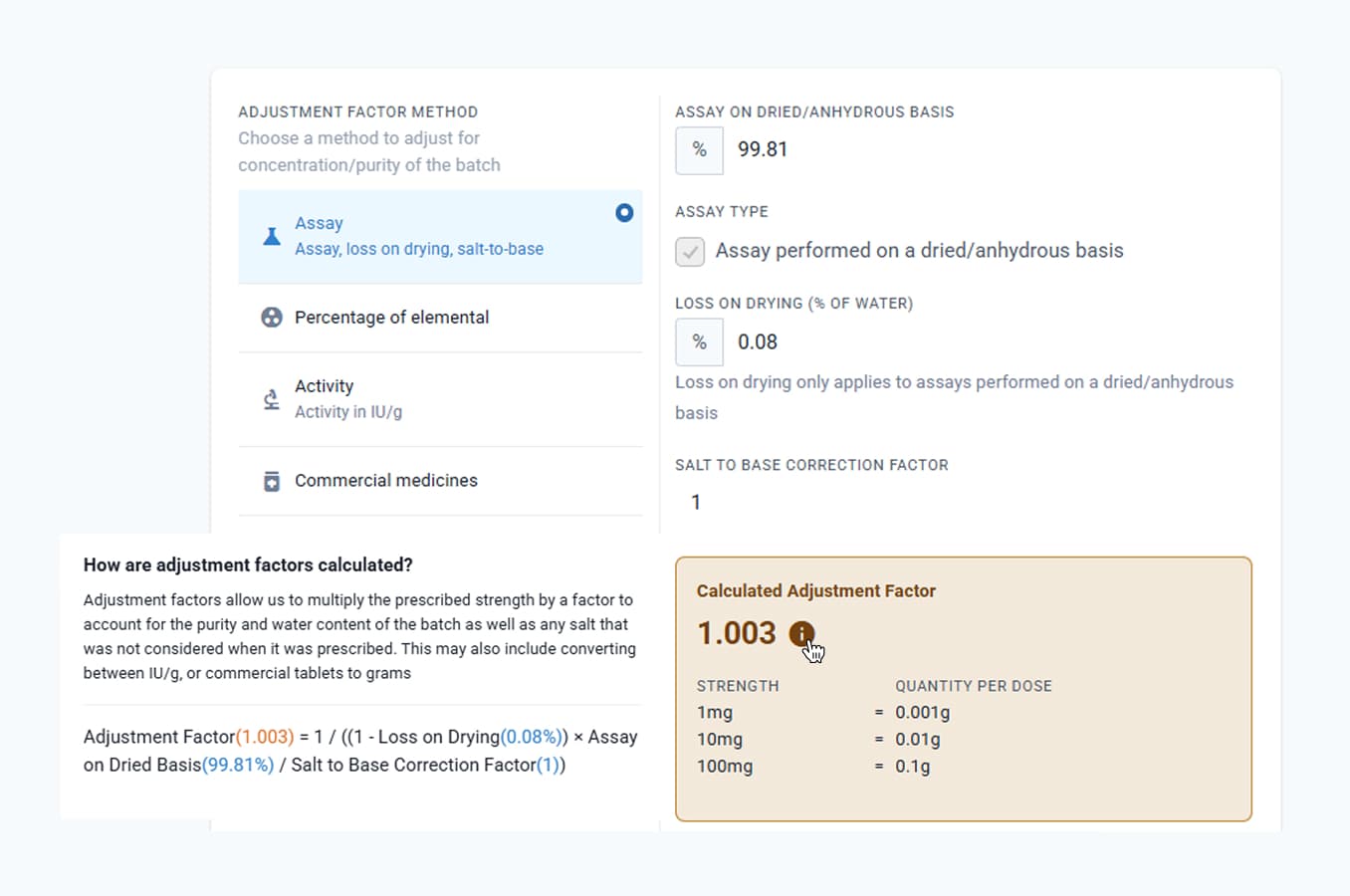
From the ingredients page
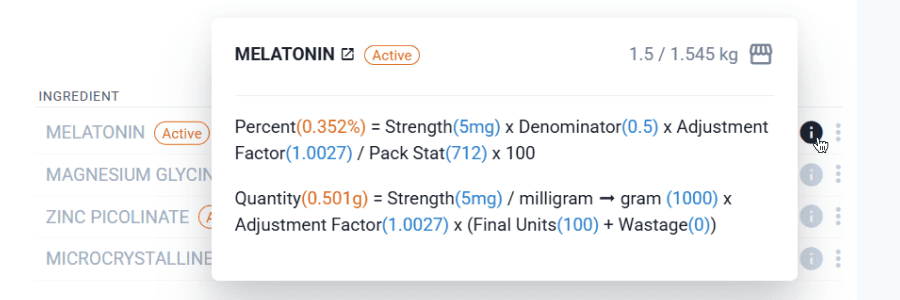
From the formulations page
To learn more about the impact of automated calculations, see: Behind the formula: What the system calculates for you.
Patient safety
Manual compounding increases the risk of dosing errors, contamination, and use of products that may later require a recall for safety reasons, such as mislabelling, potency issues, or packaging problems. A recall requires pharmacies to quickly identify affected batches and patients and notify them to prevent harm. Time is gold in a recall situation because delays in finding and removing unsafe products can increase health risks for patients.
Compound Direct makes it easy to conduct a medicinal recall procedure, providing a readily available usage history for a specific ingredient, batch stock, or compound groups that can be easily tracked and exported.
Compound Groups
Consider this: you have a stack of 50 prescriptions to complete for the day, and you have to look through all 50 to identify any items that can be prepared together. Compound Direct can automatically distil those 50 prescriptions down to grouped preparations, which may only be 30-40 compounds without any manual review.
Compound Direct automatically finds and alerts you to identical compounds that can be prepared together, just before you start compounding, using the compound groups feature. This feature reduces repetitive tasks and improves overall efficiency, unlike traditional methods that require reviewing and preparing batches manually or repeating the same process for each prescription.
See our blog about Compound Groups: How to prepare multiple compounds in one go, to learn more.
Stocktaking
Manual stocktakes are time-consuming, disruptive, and can be inaccurate. Disrupting routine operations to count ingredients, reconcile paper logs against spreadsheets, and investigate discrepancies pulls staff away from prescriptions and patient care. In fast-paced pharmacy settings, this lost time quickly accumulates, resulting in workflow bottlenecks, after-hours work, and added pressure during audits.
Manual stocktaking commonly results in:
- Discrepancies between physical stock and records
- Missed or expired ingredients
- Time lost to after-hours or rushed counts
- Increased stress during audits
Compound Direct removes the need for disruptive stocktakes by maintaining real-time inventory accuracy. When stocktakes are required, they are faster, simpler, and exception-based, allowing you to focus only on variances rather than recounting everything. This protects valuable working hours, improves accuracy, and keeps your pharmacy audit-ready without interrupting daily operations.
Learn how it works, see: Efficient inventory management: How Compound Direct’s stocktaking saves time and money blog.
Financial impact
Compounding with paper worksheets might seem cheaper upfront, but the hidden costs stack up fast. Longer hours of labour required for complex compounds, wasted ingredients from errors, failure to account for devices used, and lost productivity from inefficient workflows all take a toll. Unlike using software, manual processes don’t scale. As your business grows, so do the risks and inefficiencies.
Smart cost pricing and control
Compound Direct simplifies pricing across ingredients, formulations, compounds, devices, consumables, orders, shipping, and retail products. Live cost pricing shows the true cost and margin of each script after dispensing.
With clear breakdowns of:
- Ingredient cost
- Device cost
- Combined cost
- Patient price
- Gross profit and margin
This ensures pricing remains accurate, consistent, and profitable without manual calculations.
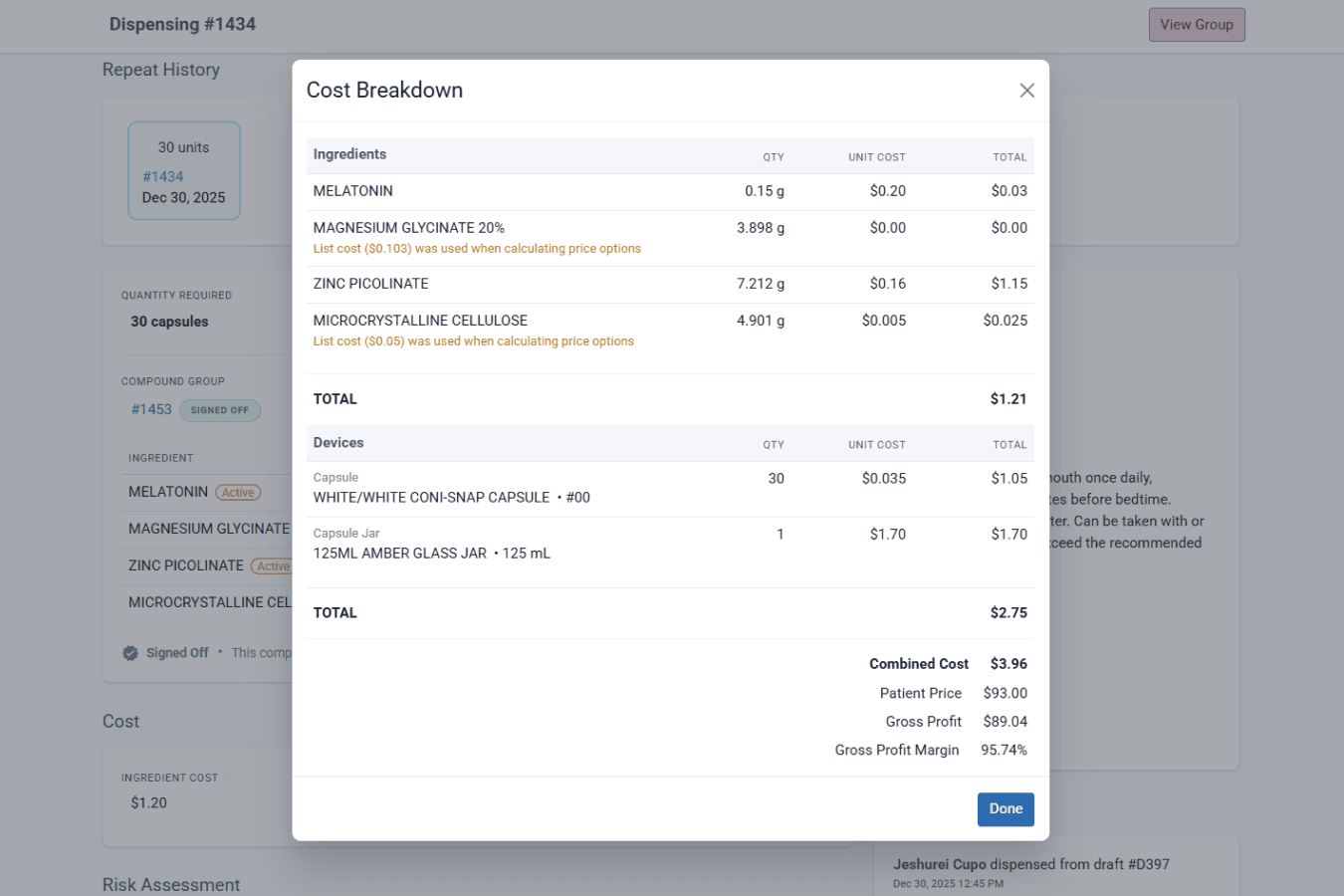
From the dispensing page
Compound Direct uses price options to create repeatable, standardised pricing rules. These account for compounding costs such as labour per hour, base script fees, ingredient and device cost multipliers, and the selected dosage form.
Pricing rules can be limited by specific conditions, so higher costs only apply when appropriate:
- Compound type
Higher pricing can apply only to complex or sterile compounds, not simple non-sterile preparations. - Ingredient count
Compounds with multiple active ingredients can attract additional costs due to increased preparation time and checks. - Devices & consumables
Extra costs are applied only when specific devices or consumables are used. - Unit ranges
Small batches can be priced differently from larger volumes to reflect preparation efficiency. - Stock availability
Pricing can adjust when ingredients need urgent sourcing or substitution.
This gives you flexibility and assurance that each compound is priced consistently and reflects the actual work and resources involved.
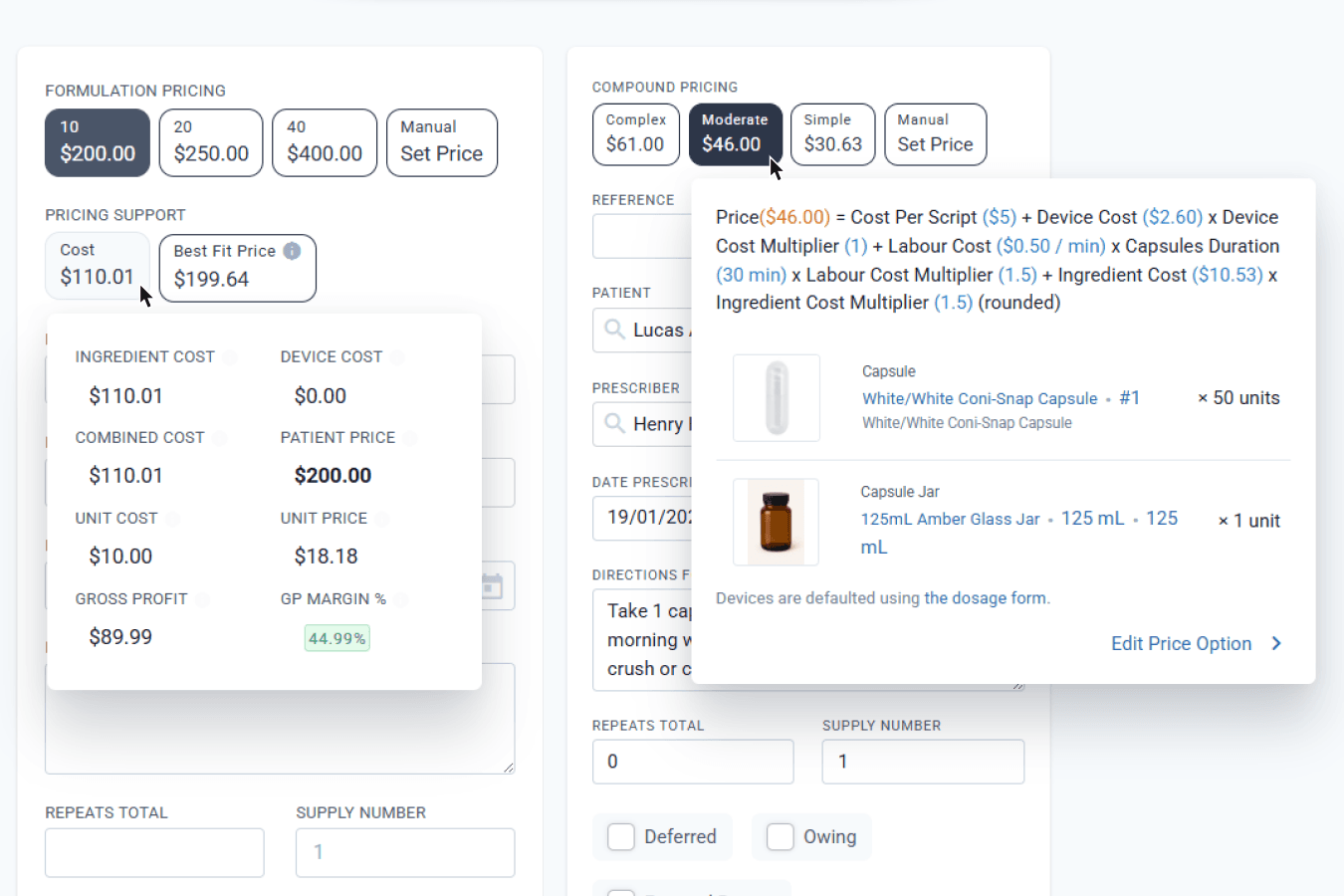
From the drafts page
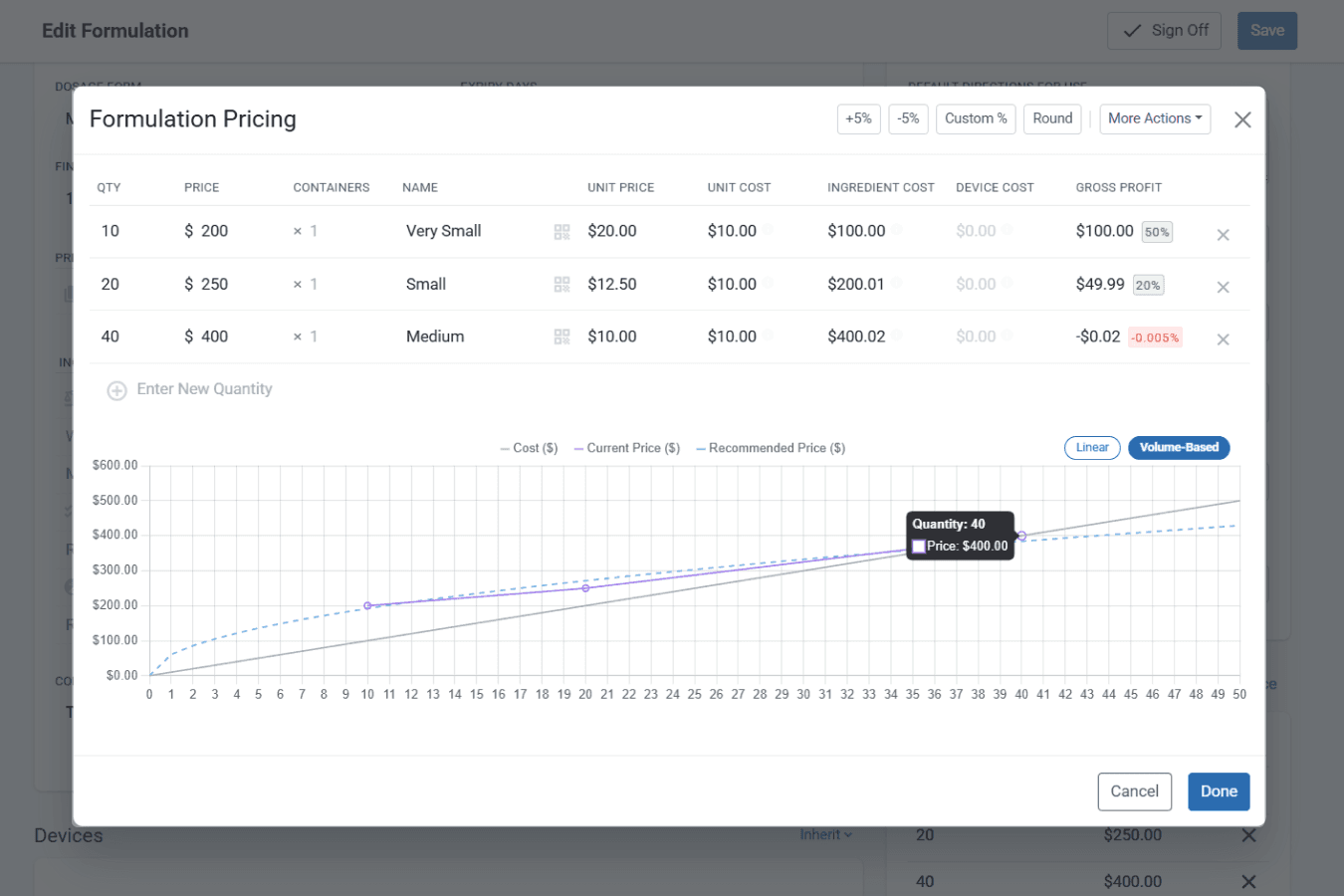
In the formulation pricing modal, Compound Direct can suggest pricing options, and you can choose or set prices based on the quantity.
Dive deeper, see our blog: The Price is Right: Intelligent pricing with Compound Direct.
Compliance risks
During an audit, retrieving a batch record from six months earlier may reveal missing signatures, referencing outdated SOPs or inventory discrepancies. Any of these issues can result in fines or more serious compliance consequences.
Manual logs often suffer from:
- Gaps & missing data
- Version confusion issues
- Disorganisation
- Lack of reminders
- Inaccountability
- Storage and printing costs
Real-time audit trails
Compound Direct maintains audit readiness by automatically logging and timestamping every action taken, including who performed each task and when, in an activity section. With access to customer, dispensed records, formulations, stock, sales, accounts, and user reports, you’re no longer scrambling for documentation; you have a complete, compliant audit trail ready when you need it.
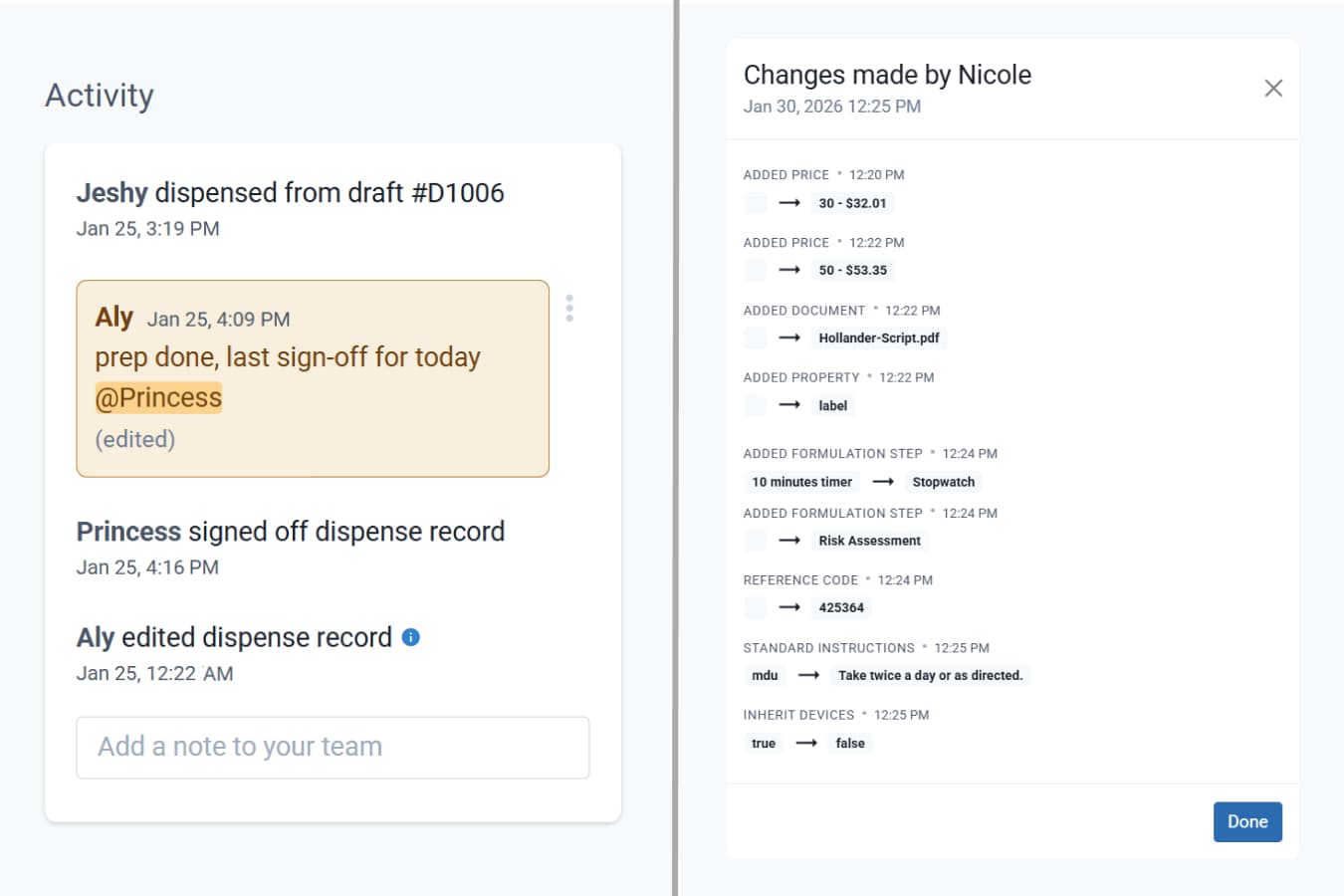
From the activity section
Human error
Picture this: a technician follows a printed SOP from months ago, unaware that the procedure was recently updated to reflect a new concentration standard. The compound is prepared and dispensed, only for someone to later discover the discrepancy.
Human errors often stem from disorganisation rather than negligence. When SOPs are scattered across binders, desktops, or emails, it's easy to lose track of the current version or the correct procedures. Even highly trained staff remain vulnerable to error in fast-paced pharmacy environments when processes lack clarity or consistency.
Standard Operating Procedures (SOPs) management
Compound Direct reduces the risk of human error by centralising SOPs, and you can keep them up-to-date. The system can notify the team with the correct procedures in tandem with routine tasks, and a built-in acknowledgement feature is logged with timestamps and your team member’s name, providing accountability. SOPs can be linked directly to any part of a workflow.
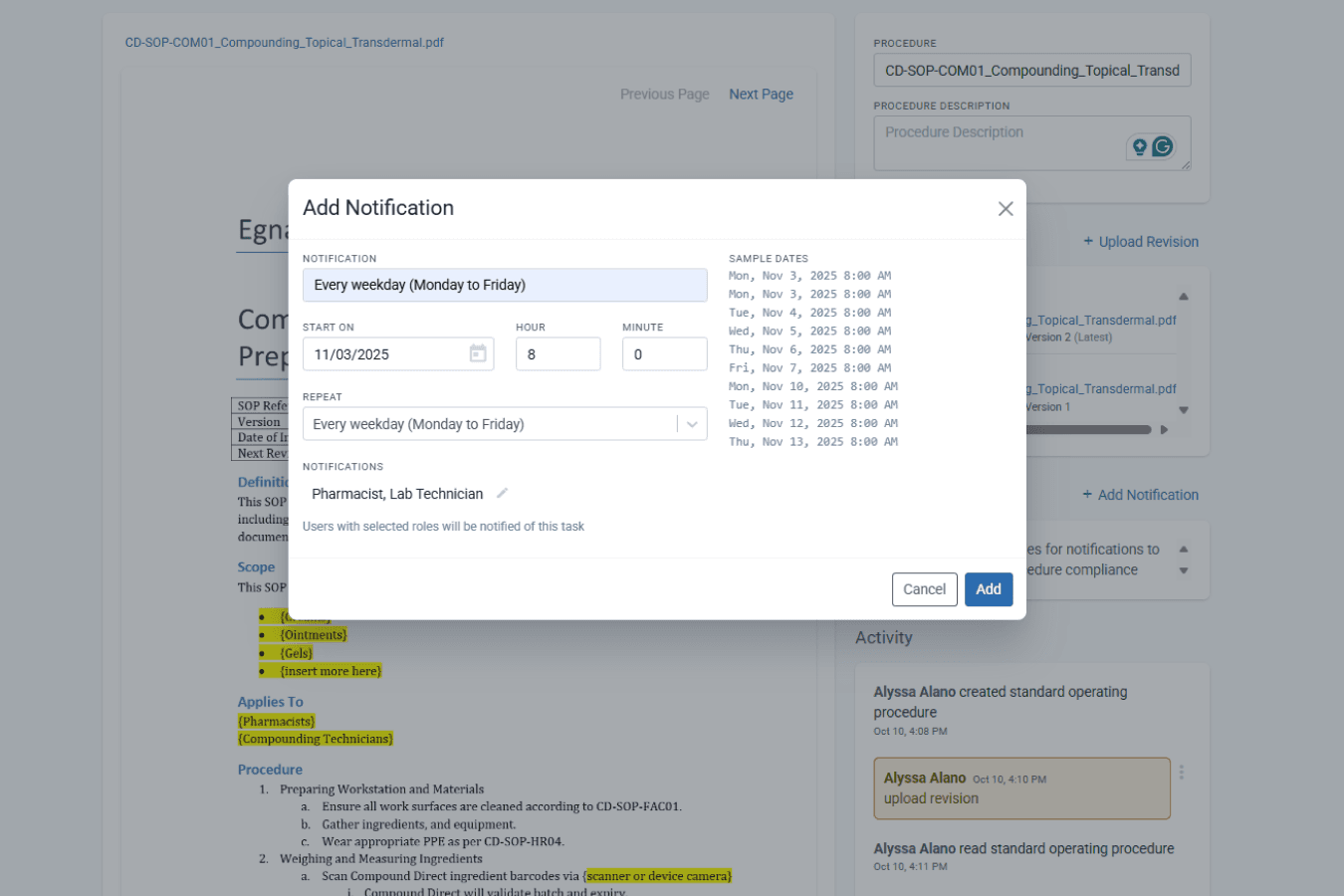
From the standard operating procedures page
To gain more insight, see our Standard Operating Procedures (SOP) blog here.
Conclusion
Although manual compounding may seem manageable, it quietly drains your pharmacy’s resources. The hidden costs: wasted ingredients, lost time, compliance risks, reputational damage, human errors, inaccurate pricing, and lost productivity are significant and growing.
Compound Direct offers a smarter, safer, more scalable way to compound, and even more than that. If you’re still relying on paper logs, spreadsheets, or outdated systems, now’s the perfect time to upgrade.
Still weighing your options? You may also find this blog helpful: The Manual to Systemised Series: Paper, Excel, or Software? What’s Powering Your Pharmacy Today?
All names and medical data shown in software screenshots are fictional and for demonstration purposes only. These figures represent fictional persons; any resemblance to real individuals is purely coincidental. Use of existing fictional names is for illustrative purposes and does not imply affiliation or endorsement.