
Real-Time Prescription Monitoring (RTPM) in Compound Direct

Real-Time Prescription Monitoring (RTPM) is an Australian state-based system designed to track the prescribing and dispensing of controlled and high-risk medicines. These systems provide pharmacists with additional clinical oversight by allowing access to a patient’s monitored medicine history before dispensing.
Each Australian state maintains its own RTPM database and monitoring program. Examples include QScript in Queensland and SafeScript in Victoria and New South Wales. While these programs operate independently at a state level, they are built on a shared infrastructure provided by Fred IT Group, the same platform that supports eRx, MySL, and related electronic prescription services.
In this blog, we’ll walk you through how RTPM works in Compound Direct, including pre-dispense checks, risk assessment alerts, and how the system supports compliant dispensing workflows for monitored medicines.
Real-Time Prescription Monitoring (RTPM)
Real-Time Prescription Monitoring (RTPM) is an Australian system designed to track high-risk and controlled medicines using a list of monitored active ingredients flagged by the government to create consistency in oversight between prescribers and pharmacies. When a monitored ingredient is selected, all related products such as compounded formulas, stock solutions, and derived preparations must also be explicitly marked, as the system does not automatically infer downstream use.
Once flagged, these medicines are checked against state-based databases. Before dispensing, pharmacists receive a pre-check that highlights potential risks such as duplicate prescribing or frequent use, and alerts can be acknowledged but not disabled. Schedule 8 medicines are always included, while some Schedule 4 medicines may also be monitored depending on jurisdiction and classification.
Overall, RTPM supports safer prescribing by providing real-time clinical insight while maintaining efficient dispensing workflows.
RTPM in Compound Direct
In Compound Direct, when adding an ingredient record, any monitored active ingredient must be entered into the system.
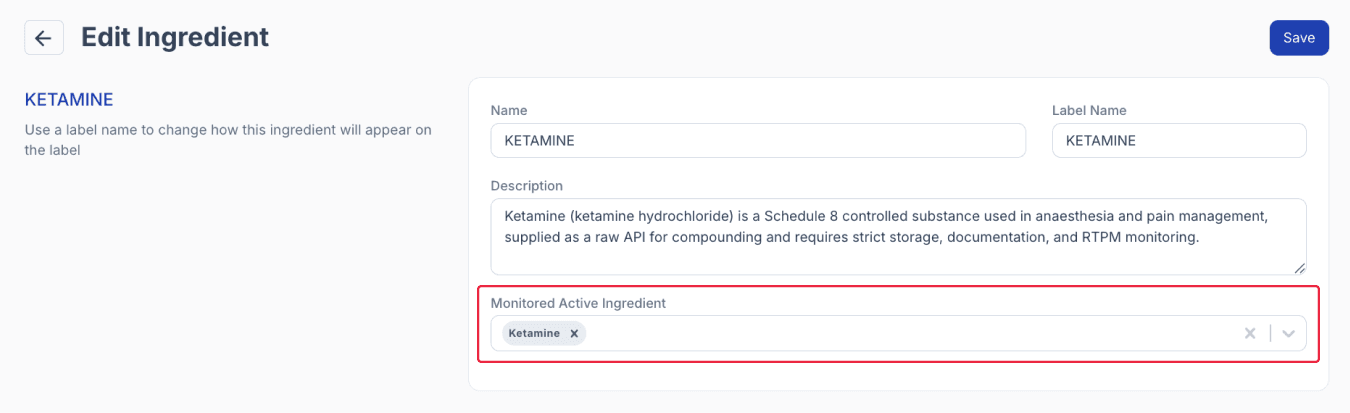
From the edit ingredient page
When you select a monitored active ingredient, anything that uses that ingredient becomes classified as monitored. This includes compounded formulas, batch stock, and any preparations.
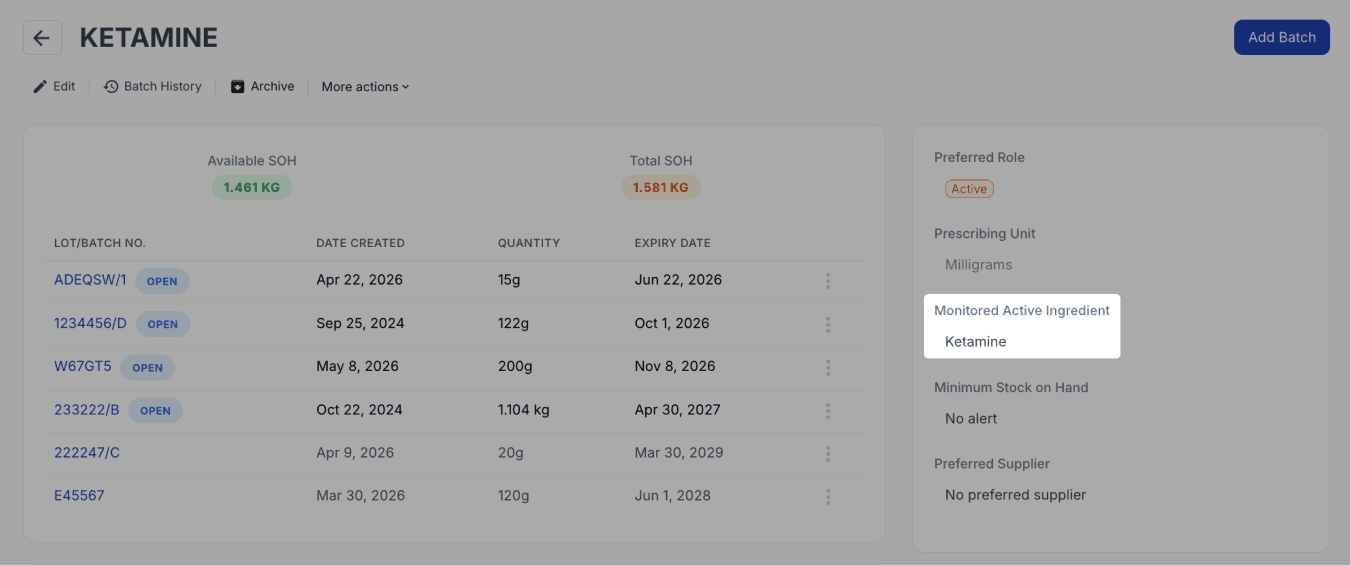
From the ingredients page
It is important to note that if a monitored ingredient is used within a stock solution, that stock solution must also be marked as monitored. Drugs entered into the system must also declare any monitored active ingredients.
The system does not automatically infer monitoring based on downstream use, so each relevant component must be explicitly configured.
RTPM pre-dispense checks
Once a monitored ingredient is present in a product, it becomes eligible for real-time prescription monitoring.
Before dispensing, the system performs a pre-check against these monitoring databases. An RTPM Notification will be displayed under the Risk Assessment section.
This does not prevent dispensing, but it provides important clinical context. Pharmacists can review a patient’s dispensing history via the link available in the notification and identify potential risks, such as frequent dispensing of monitored medicines across multiple providers.
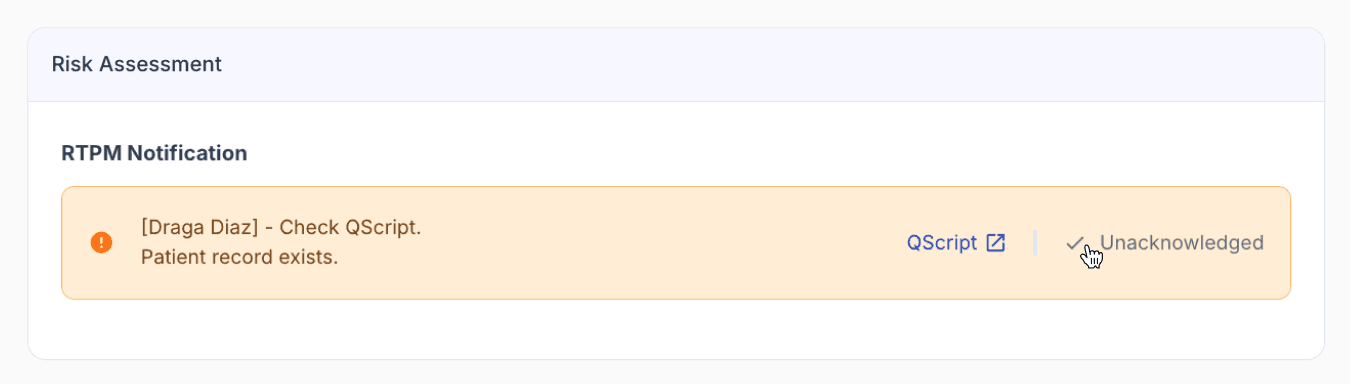
From the dispensed record
When the check is reviewed, the pharmacist can acknowledge the alert before proceeding. In some systems, this acknowledgement can be set as a default preference so it does not repeatedly interrupt workflow. However, the monitoring itself cannot be disabled.
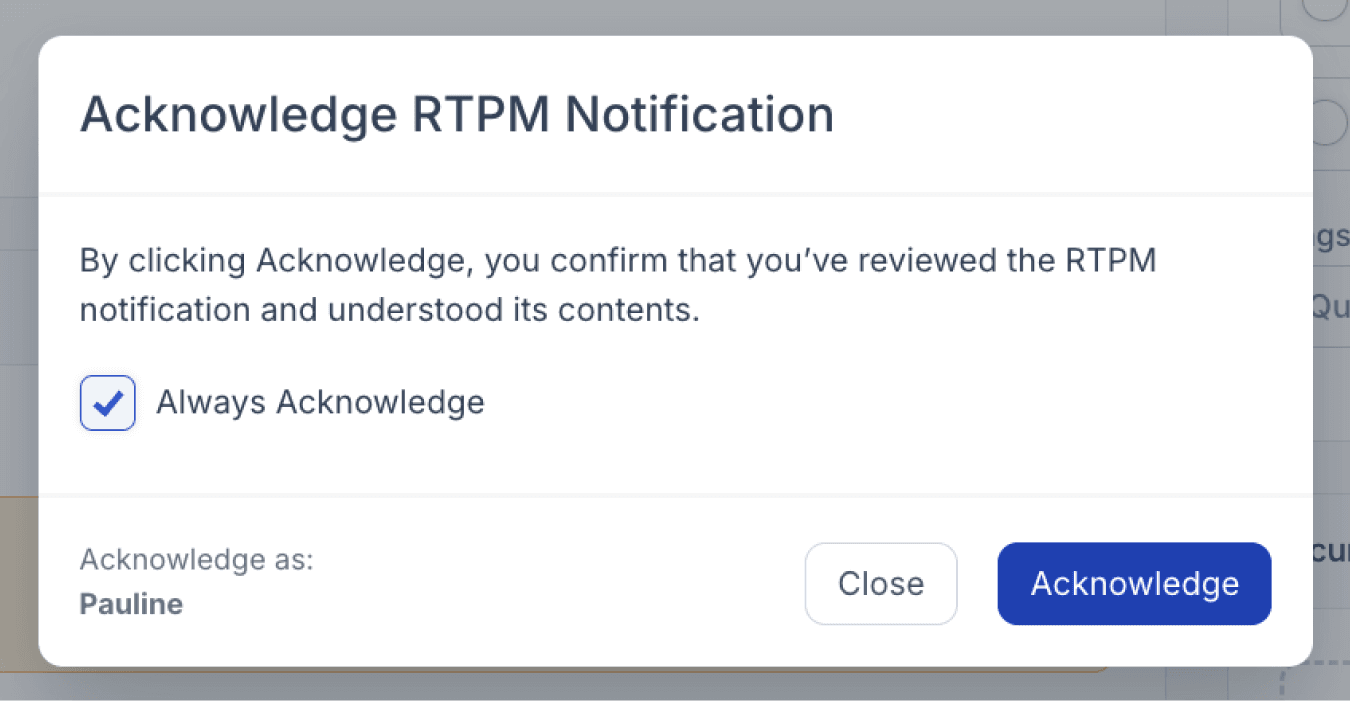
From the dispensed page
Scheduling and monitoring rules
Medicine scheduling also plays an important role in RTPM workflows.
- Schedule 8 (S8) medicines are always submitted to RTPM systems.
- Schedule 4 (S4) medicines may also be monitored depending on the active ingredient and jurisdiction-specific rules.
- Some states also apply additional subclassifications that may trigger different monitoring requirements.
Because monitoring requirements vary between jurisdictions, Compound Direct supports RTPM workflows while allowing pharmacies to remain aligned with state-based regulatory obligations.
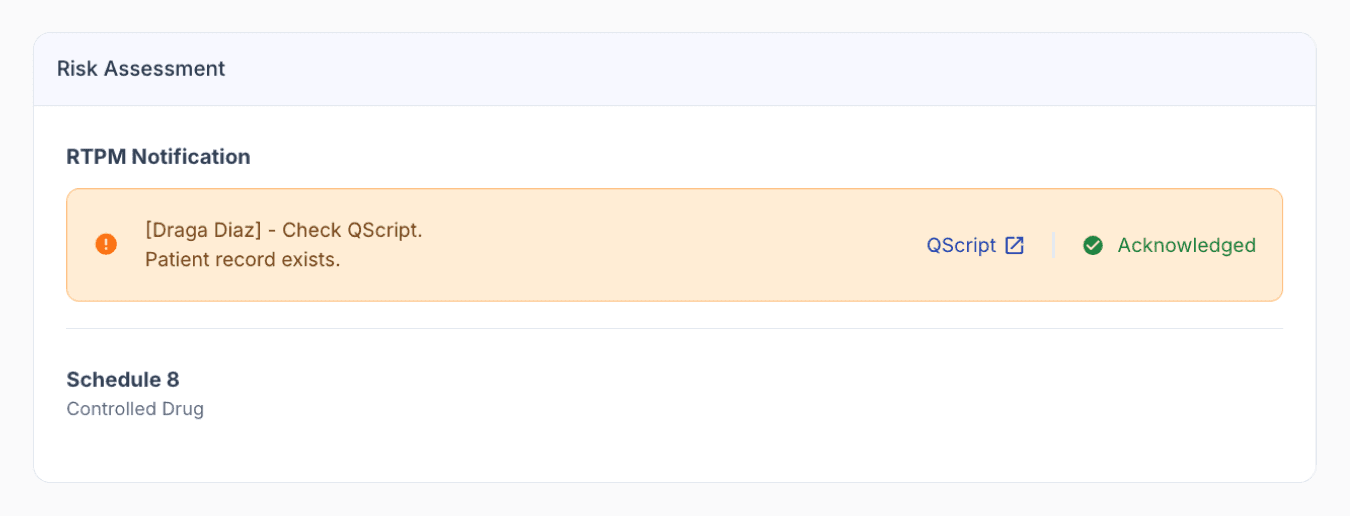
From the dispensed record
Overall, this system ensures that higher risk medicines are appropriately tracked and reviewed, while still allowing pharmacists to maintain workflow efficiency during dispensing.
RTPM alerts
The RTPM alert banner will appear in green when no matching patient records are found. This may occur if the prescription has not been submitted to eRx, such as when dispensing from a paper prescription.

The RTPM alert banner will appear in red when there is an active RTPM alert associated with the patient's dispensing history. Pharmacists are required to review the alert and assess whether it is safe and appropriate to proceed with dispensing.
Examples of alerts that may trigger a red RTPM banner include:
High-risk drug combinations: Certain monitored medicine combinations have been recorded within the last 90 days, including:
- Methadone + benzodiazepine
- Methadone + long-acting opioid
- Fentanyl + benzodiazepine
- Fentanyl + long-acting opioid
Opioid dose threshold alerts: The patient's average daily morphine equivalent dose (MED) over the previous 90 days exceeds 100 mg MED per day, indicating a high-risk opioid dose.
Multiple provider episodes: Prescriptions from four or more prescribers or medical practices have been recorded in the RTPM system within the last 90 days.

The RTPM alert banner will also appear in red when the dispensing record does not have a prescriber assigned. RTPM checks cannot be completed until a valid prescriber has been added to the dispensing record. This banner may also appear in red if the system is unable to complete the prescription monitoring request.

Submitting paper prescriptions
When a paper prescription is dispensed in the system, it is treated as a manual dispense. The system supports a paper prescription submission workflow, which sends the prescription data to the eRx Exchange. This process is typically automated when the prescription contains monitored medicines.
In these cases, the system automatically submits the script in the background. This ensures the prescription is registered with eRx and can be processed by downstream real time prescription monitoring systems. It is required for compliance and data propagation into systems such as QScript and SafeScript.
The eRx Exchange acts as the central processing layer between dispensing systems and real time prescription monitoring systems. Once a script is submitted, eRx processes and standardises the data before passing relevant information to state-based monitoring systems. While each system applies its own jurisdictional rules, they all rely on the same underlying data pipeline.
When a script is submitted, the system sends structured data to eRx. This payload typically includes:
- Patient identifiers and demographics
- Prescriber details
- Dispensed item information
- Quantity and supply details
- Pharmacy identifiers
This data is used to reconstruct the prescription record in downstream systems, including RTPM databases.
Monitoring compounded medicines
For compounded medicines, there are often no standard drug codes available. In these cases, the system relies on the generic name submitted with the prescription to identify the medicine being dispensed. Compound Direct supports this process by providing the appropriate active ingredient identifier for monitoring purposes. For example, a compound labelled as THC can be submitted using the specific identifier delta-9-tetrahydrocannabinol, ensuring RTPM systems correctly recognise the monitored substance.
Because compounded products do not always map to standard drug code systems, RTPM identification depends on correctly formatted generic naming. Real-time prescription monitoring systems use this submitted data to identify monitored substances. Therefore, correct configuration of monitored active ingredients and consistent naming conventions are essential to ensure reliable RTPM reporting.
When a prescription contains a monitored active ingredient, Compound Direct automatically submits the prescription to eRx, even if an eScript token has not been scanned. This ensures the prescription is included in RTPM workflows and available to downstream monitoring systems without requiring any manual action from the pharmacist.
Once submitted, the prescription can proceed through repeat creation and barcode generation, similar to a standard electronic prescription workflow.
Summary
Real-Time Prescription Monitoring (RTPM) helps pharmacists identify and manage the supply of monitored medicines by providing access to a patient's dispensing history through state-based monitoring systems such as QScript and SafeScript. In Compound Direct, monitored active ingredients must be explicitly configured, including any compounded formulas, stock solutions, or preparations that contain them. When a monitored medicine is dispensed, the system performs a pre-dispense RTPM check and displays any relevant risk assessment alerts for pharmacist review.
Compound Direct also supports the automatic submission of monitored prescriptions to the eRx Exchange, ensuring compliance with jurisdictional reporting requirements and facilitating data sharing with RTPM systems. Accurate ingredient configuration and naming are essential, particularly for compounded medicines, to ensure reliable monitoring and reporting outcomes.
All names and medical data shown in software screenshots are fictional and for demonstration purposes only. These figures represent fictional persons; any resemblance to real individuals is purely coincidental. Use of existing fictional names is for illustrative purposes and does not imply affiliation or endorsement.